


Call us and get your quote!
10% Off Your First Custom Part
-Start Today!
Send your drawings for a free review and quick quote. Our engineers are here to help.
ISO certified | Fast delivery | Factory Direct

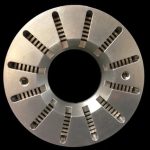
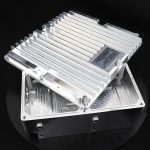
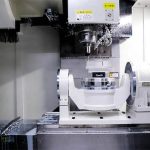
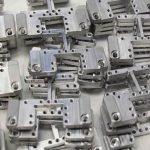
CNC aluminum machining uses advanced computer-controlled equipment to transform solid aluminum stock into precision-engineered parts.

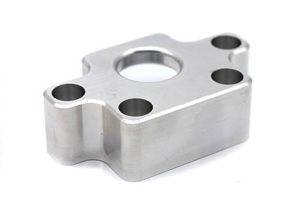
CNC aluminum machining uses advanced computer-controlled equipment to transform solid aluminum stock into precision-engineered parts. Known for its excellent machinability, aluminum allows for faster production, tighter tolerances, and superior surface finishes. With its lightweight nature, high strength-to-weight ratio, natural corrosion resistance, and excellent thermal and electrical conductivity, aluminum is suitable for both prototypes and production components. Additional surface treatments such as anodizing further enhance its durability and performance. atmosphere.
01
Low cutting forces and good chip evacuation mean higher spindle speeds and fewer tool changes.
02
Grades like 7075 rival some steels on strength at roughly a third of the mass.
03
A natural oxide layer protects the part even before anodizing or coating is applied.
04
Useful for heat sinks, enclosures, and current-carrying components alike.
05
Takes anodizing, bead blasting and polishing cleanly, with consistent, repeatable results.
06
Scrap and swarf are recycled at high value, keeping material cost predictable.
Five alloys cover almost every CNC job we run. Each is coded here by finish tone for quick reference on the shop floor.
A versatile aluminum alloy offering excellent machinability, weldability, and corrosion resistance. It is widely used for structural components, aerospace parts, automotive applications, and high-performance bike frames.
| Tensile Strength, Yield (MPa) | Fatigue Strength (MPa) | Elongation at Break (%) | Hardness (Brinell) | Density (g/cm³) |
|---|---|---|---|---|
| 276 | 96 | 17 | 95 | 2.70 |
5052 aluminum is known for its outstanding corrosion resistance, excellent formability, and good weldability. It is commonly selected for CNC machined parts exposed to moisture, chemicals, and marine environments.
| Tensile Strength, Yield (MPa) | Fatigue Strength (MPa) | Elongation at Break (%) | Hardness (Brinell) | Density (g/cm³) |
|---|---|---|---|---|
| 193 | 117 | 22 | 60 | 2.68 |
This high-strength alloy is often used in aerospace applications due to its excellent fatigue resistance and high strength-to-weight ratio. It is suitable for aircraft structures, truck wheels, and automotive parts.
| Tensile Strength, Yield (MPa) | Fatigue Strength (MPa) | Elongation at Break (%) | Hardness (Brinell) | Density (g/cm³) |
|---|---|---|---|---|
| 325 | 140 | 20 | 120 | 2.78 |
7075 aluminum is a high-strength alloy widely used in aerospace and high-performance applications. It provides superior strength-to-weight ratio and excellent fatigue performance, making it suitable for demanding structural components.
| Tensile Strength, Yield (MPa) | Fatigue Strength (MPa) | Elongation at Break (%) | Hardness (Brinell) | Density (g/cm³) |
|---|---|---|---|---|
| 503 | 159 | 11 | 150 | 2.81 |
6082 aluminum is a medium-strength alloy with excellent machinability, corrosion resistance, and weldability. It is widely used in structural applications where good mechanical performance and durability are required.
| Tensile Strength, Yield (MPa) | Fatigue Strength (MPa) | Elongation at Break (%) | Hardness (Brinell) | Density (g/cm³) |
|---|---|---|---|---|
| 250 | 95 | 14 | 95 | 2.71 |
Kintec provides comprehensive surface finishing solutions for aluminum CNC machined parts, helping manufacturers achieve improved aesthetics, wear resistance, corrosion protection, and dimensional stability. From anodizing and powder coating to polishing and bead blasting, each finishing process is customized to meet specific application requirements.
Aluminum is a lightweight metal with a density of approximately 2.7 g/cm³, about one-third the weight of steel. Aluminum alloys such as 6061 and 7075 provide high strength while maintaining low weight, making them ideal for aerospace components, automotive parts, robotics, and structural applications where weight reduction is important.
Aluminum is one of the most machinable metals used in CNC manufacturing. Its excellent cutting performance allows higher machining speeds, shorter production cycles, and the ability to produce complex geometries with tight tolerances. This makes aluminum suitable for prototypes, low-volume production, and precision machined components.
Aluminum naturally forms a protective oxide layer that helps prevent corrosion and oxidation. Surface treatments such as anodizing, powder coating, and painting can further enhance corrosion resistance, making aluminum CNC parts suitable for outdoor, marine, and industrial environments.
Aluminum provides excellent heat and electrical conductivity, making it widely used for applications requiring efficient heat transfer. Common examples include heat sinks, electronic enclosures, LED components, and electrical housings.
Different aluminum alloys provide different performance advantages. For example:
Aluminum also has limitations, including lower hardness and wear resistance compared with some metals. Understanding these advantages and disadvantages helps engineers select the right material for their CNC machining projects.
Aluminum is softer than stainless steel and other hardened metals, which makes it more vulnerable to scratches, dents, and surface damage. For applications requiring higher surface hardness, additional treatments such as hard anodizing may be required.
Due to its relatively soft surface, aluminum may not be the best choice for components exposed to continuous friction or abrasive conditions. Engineers often use coatings or alternative materials when high wear resistance is required.
Although aluminum is abundant and lightweight, premium aluminum alloys and specialized machining requirements can increase material and manufacturing costs compared with common steel materials.
Aluminum loses mechanical strength at elevated temperatures compared with materials such as stainless steel or titanium. It may not be suitable for applications involving continuous high-temperature exposure.
Aluminum CNC parts are commonly used in aerospace, automotive, electronics, and industrial equipment because of their lightweight design, durability, and excellent machinability..
Aluminum CNC machining is widely used in robotics and automation systems where low weight and high precision are essential. Typical components include robot arms, end-effectors, mounting plates, frames, and custom mechanical parts.
Aluminum CNC parts are commonly used in industrial machinery and automation equipment due to their durability, corrosion resistance, and ease of machining. Examples include fixtures, jigs, machine components, tooling parts, and custom mechanical assemblies.
Aluminum is an ideal material for electronic components because of its excellent thermal conductivity and lightweight properties. CNC machined aluminum parts are frequently used for heat sinks, electronic enclosures, housings, control panels, and mounting brackets.
Medical and healthcare equipment manufacturers often choose CNC machined aluminum parts because they are lightweight, corrosion-resistant, and easy to maintain. Common applications include medical device housings, surgical instrument components, and precision equipment parts.
The automotive industry uses CNC machined aluminum components to improve vehicle efficiency and reduce weight. Typical applications include engine components, suspension parts, transmission housings, brackets, and custom performance parts that require durability and dimensional accuracy.
Aluminum CNC machined parts are widely used in the aerospace industry because they provide high strength while reducing overall weight. Common applications include aircraft brackets, structural components, housings, mounting parts, and precision fittings that require tight tolerances and reliable performance.
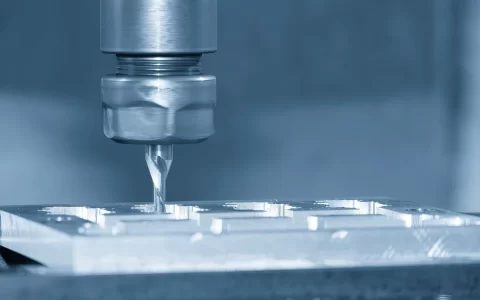

6061-T6 aluminum is the most commonly used grade for CNC machining because it offers a good balance of machinability, strength, corrosion resistance, and weldability. For applications requiring higher strength, 7075 aluminum is often selected for aerospace and high-performance components.
Aluminum is lighter and faster to machine than steel, making it ideal for applications where weight reduction and shorter production times are important. However, steel generally provides higher hardness, strength, and wear resistance for heavy-duty applications. production, and precision machined components.
Aluminum CNC machined parts typically achieve tolerances of ±0.005 mm to ±0.05 mm, depending on part geometry, material grade, machining process, and quality requirements. Precision features can achieve tighter tolerances with proper tooling and fixturing.
Yes, aluminum CNC parts can be anodized in a wide range of colors, including black, red, blue, gold, and natural finishes. Type II anodizing is commonly used for decorative and corrosion protection, while Type III hard anodizing provides improved wear resistance.
The lead time for aluminum CNC machining usually ranges from a few days to several weeks, depending on part complexity, quantity, finishing requirements, and inspection needs. Simple prototypes can often be completed within 3–7 days, while production parts may require additional time for surface treatments and quality checks.
Aluminum is widely used in CNC machining because it combines lightweight properties, excellent machinability, corrosion resistance, and cost efficiency. These advantages make it suitable for aerospace parts, automotive components, electronics housings, medical devices, and industrial equipment.
Kintec provides custom aluminum CNC machining services for aerospace, automotive, medical, robotics, and industrial applications. Contact us to discuss your requirements and get a fast quotation.
Send your drawings for a free review and quick quote. Our engineers are here to help.
ISO certified | Fast delivery | Factory Direct