


Call us and get your quote!
10% Off Your First Custom Part
-Start Today!
Send your drawings for a free review and quick quote. Our engineers are here to help.
ISO certified | Fast delivery | Factory Direct

Electroplating is an electrochemical surface finishing process that deposits a thin layer of metal onto a CNC machined part using an electrical current. The plated layer can improve corrosion resistance, wear resistance, electrical conductivity, surface hardness, dimensional characteristics, and appearance.
Key benefits include:
✓ Improves corrosion resistance
✓ Enhances wear and surface durability
✓ Improves electrical conductivity
✓ Provides specific surface properties
✓ Enhances appearance and surface uniformity
✓ Can build controlled surface thickness
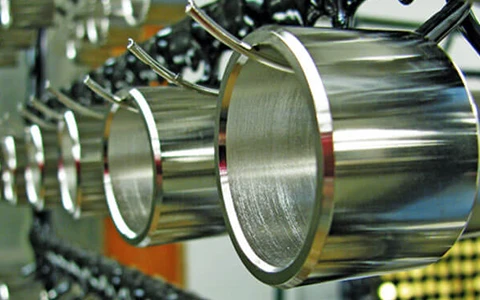
Electroplating is widely used for CNC machined components when a functional metal coating is required. The appropriate plating metal, coating thickness, substrate preparation, and process parameters depend on the part material, geometry, tolerance requirements, and intended application.
The plating method should be selected according to part size, geometry, production volume, surface requirements, and handling characteristics.
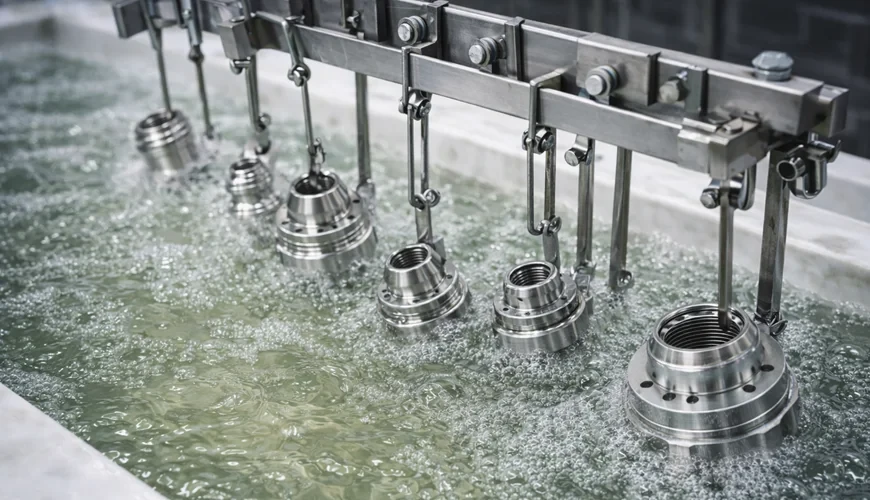
Rack electroplating holds individual parts on a rack during processing. It is suitable for larger, delicate, or geometrically complex CNC components that require controlled positioning.
Best For
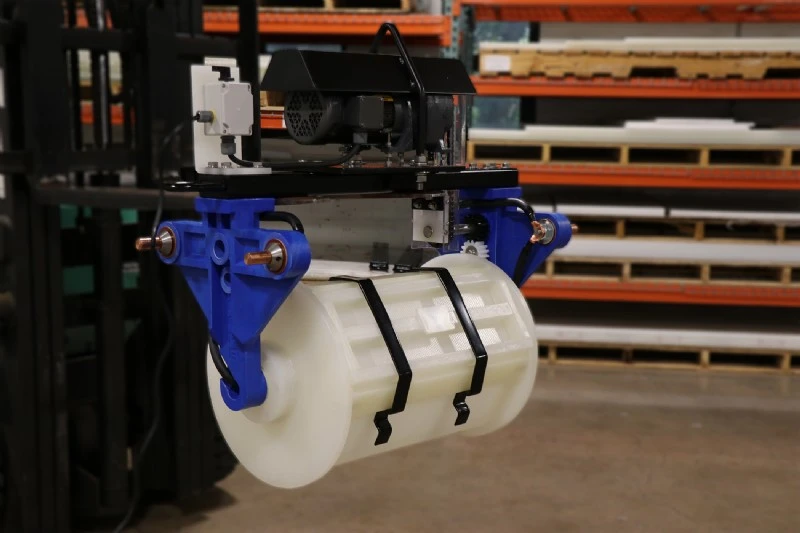
Barrel plating processes multiple small components together inside a rotating barrel. It is efficient for high-volume production of small, durable parts.
Best For
Electroplating uses an electrical current to transfer metal ions from an electrolyte solution onto the surface of a conductive workpiece. Proper cleaning, electrical conditions, bath chemistry, part positioning, and processing time are essential for consistent coating quality.
01
The CNC machined part is cleaned to remove oil, grease, dirt, oxides, and machining residues. Proper surface preparation improves coating adhesion and helps prevent plating defects.
02
The part is placed into an electrolyte containing dissolved metal ions. The solution chemistry is selected according to the required plating material and application.
03
The CNC part acts as the cathode while the plating metal normally acts as the anode. Direct current causes metal ions to move through the electrolyte and deposit onto the part surface.
04
After plating, the component is rinsed and inspected to verify coating coverage, appearance, adhesion, and dimensional requirements..
Electroplating is commonly performed on conductive metals and can also be applied to selected non-conductive materials after appropriate surface preparation and activation. The substrate strongly affects coating adhesion, uniformity, and final performance.
| Material | Typical Electroplating Result | Common Applications |
|---|---|---|
| Stainless Steel | Corrosion-resistant metallic coating | Medical, industrial |
| Carbon Steel | Protective plated surface | Automotive, hardware |
| Aluminum | Specialized plated coating | Aerospace, electronics |
| Copper | Conductive plated surface | Electrical components |
| Brass | Decorative and functional coating | Connectors, fittings |
| Titanium | Specialized plated surface | Aerospace, medical |
| Engineering Plastics | Conductive metallic coating after activation | Electronics, automotive |
Metal plating can create a protective barrier that helps the substrate withstand corrosive environments.
Certain plated metals improve surface hardness and resistance to abrasion, helping components maintain performance during repeated use.
Copper, silver, and gold plating can improve electrical conductivity and contact performance for electrical and electronic components.
Electroplating can provide a bright, uniform, or decorative metallic appearance while improving surface consistency.
Different plating materials can provide specific properties such as hardness, conductivity, corrosion resistance, or reduced friction.
Electroplating can significantly improve the functional properties of CNC machined parts, but coating selection, substrate compatibility, surface preparation, and process control must be carefully considered.
Oil, grease, oxides, and other contaminants can interfere with coating adhesion and plating quality.
Plating adds material to the part surface, so coating thickness needs to be considered when designing precision holes, threads, mating surfaces, and tight tolerances.
Part positioning and electrical conditions can influence how evenly metal deposits across different areas of a component.
The substrate and plating material need to be compatible with the selected chemical process and intended operating environment.
Electroplating defects can result from contamination, incorrect electrical parameters, poor surface preparation, or unsuitable process conditions. Identifying the root cause helps manufacturers achieve consistent surface finishing quality.
• Incorrect part positioning
• Uneven current distribution
• Inconsistent bath conditions
• Optimize part and anode positioning
• Control current density
• Maintain stable electrolyte conditions
• Poor surface preparation
• Oil or grease contamination
• Incompatible substrate conditions
• Clean and activate the substrate properly
• Remove machining residues
• Verify substrate and plating compatibility
• Contaminated electrolyte
• Incorrect processing parameters
• Inconsistent surface preparation
• Maintain clean plating solutions
• Control process parameters
• Standardize pre-treatment procedures
Electroplating adds a metal layer to the machined surface, so coating thickness should be included when designing tight-tolerance features such as holes, threads, shafts, and mating surfaces.
✓ Specify required plating thickness
✓ Allow for coating buildup during CNC machining
✓ Protect critical dimensional surfaces when necessary
✓ Inspect finished dimensions after plating
Need CNC machined components with corrosion protection, improved wear resistance, electrical conductivity, or a durable metallic surface? Kintec Machining provides precision CNC machining and professional surface finishing solutions for prototypes, low-volume production, and custom industrial components. Tell us your material, dimensions, plating requirements, and application to receive a manufacturing solution tailored to your project.
Send your drawings for a free review and quick quote. Our engineers are here to help.
ISO certified | Fast delivery | Factory Direct