


Call us and get your quote!
10% Off Your First Custom Part
-Start Today!
Send your drawings for a free review and quick quote. Our engineers are here to help.
ISO certified | Fast delivery | Factory Direct

Discover precision stainless steel CNC machining services for durable, corrosion-resistant parts. Explore stainless steel grades, machining capabilities, applications, and benefits from Kintec Machining.
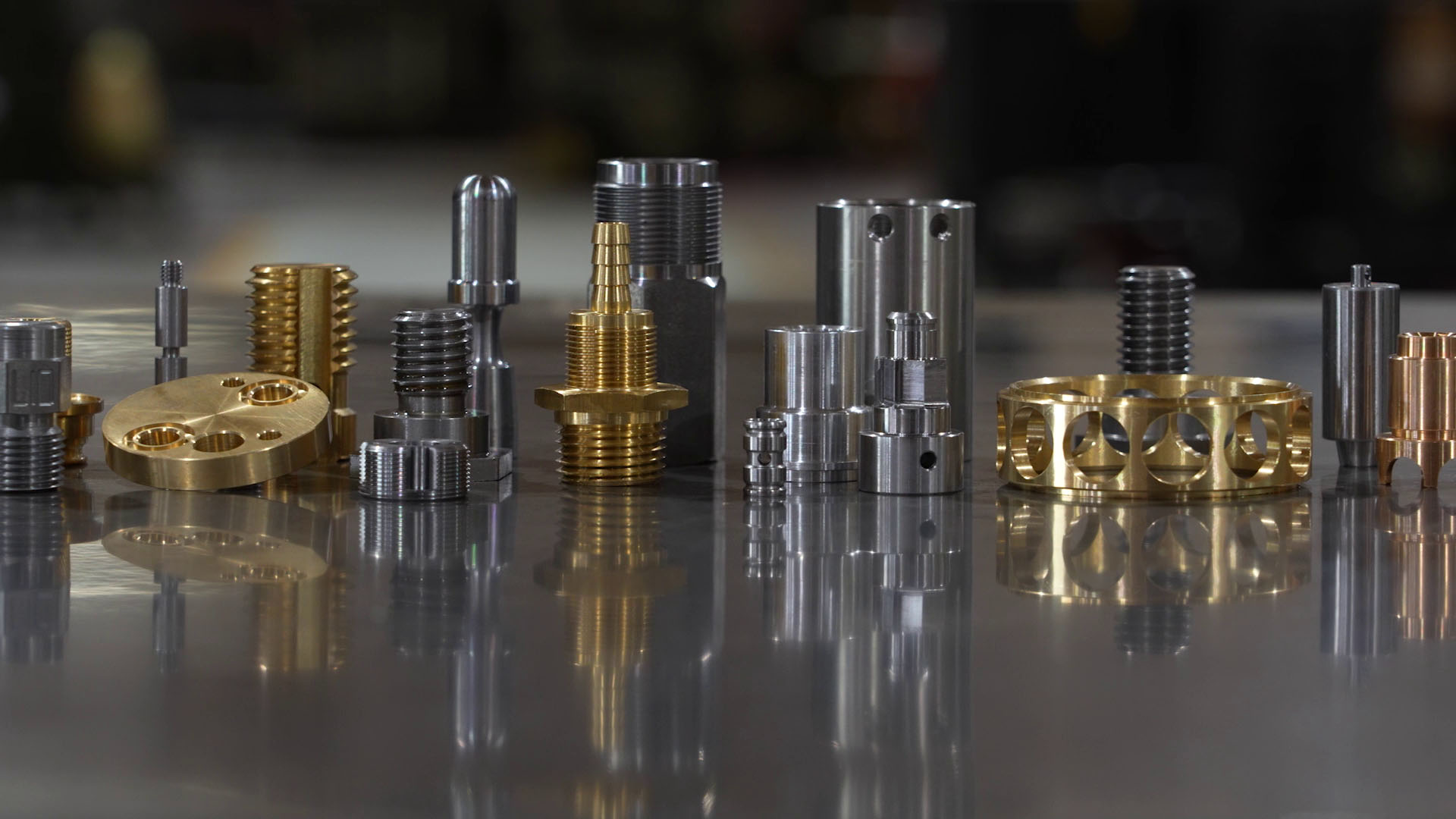
Discover precision stainless steel CNC machining services for durable, corrosion-resistant parts. Explore stainless steel grades, machining capabilities, applications, and benefits from Kintec Machining.
01
Stainless steel offers superior corrosion resistance compared with many conventional metals. Different stainless steel grades provide different levels of resistance against moisture, chemicals, saltwater, and high-temperature environments.
02
Stainless steel provides excellent tensile strength, hardness, and wear resistance, allowing CNC machined parts to withstand heavy loads, vibration, and mechanical stress.
03
Stainless steel can achieve a smooth and attractive surface finish after CNC machining, polishing, brushing, or other finishing processes.Its premium appearance makes stainless steel a preferred choice for both functional components and visible consumer products.
04
Different stainless steel grades provide unique combinations of machinability, corrosion resistance, hardness, and heat resistance.
05
Modern CNC machining technology allows stainless steel components to achieve tight tolerances, complex geometries, and consistent quality.
Choosing the right stainless steel grade is essential for achieving the required performance, machining efficiency, and cost balance.The most commonly used stainless steel grades for CNC machining include 304, 316, 303, 17-4 PH, and 420 stainless steel.
304 stainless steel is the most widely used austenitic stainless steel for CNC machining. It provides excellent corrosion resistance, good toughness, and reliable mechanical performance, making it suitable for a wide range of industrial applications.
| Tensile Strength, Yield (MPa) | Fatigue Strength (MPa) | Elongation at Break (%) | Hardness (Brinell) | Density (g/cm³) |
|---|---|---|---|---|
| 215 | 240 | 70 | 123 | 8.00 |
304 stainless steel is the most widely used austenitic stainless steel for CNC machining. It provides excellent corrosion resistance, good toughness, and reliable mechanical performance, making it suitable for a wide range of industrial applications.
| Tensile Strength, Yield (MPa) | Fatigue Strength (MPa) | Elongation at Break (%) | Hardness (Brinell) | Density (g/cm³) |
|---|---|---|---|---|
| 215 | 240 | 70 | 123 | 8.00 |
316 stainless steel is a corrosion-resistant stainless steel grade containing molybdenum, providing superior resistance to chlorides, chemicals, and marine environments. It is commonly selected for applications requiring long-term durability.
| Tensile Strength, Yield (MPa) | Fatigue Strength (MPa) | Elongation at Break (%) | Hardness (Brinell) | Density (g/cm³) |
|---|---|---|---|---|
| 205 | 240 | 60 | 149 | 8.00 |
17-4 PH stainless steel is a precipitation-hardening stainless steel known for its high strength, hardness, and excellent corrosion resistance. It is widely used for high-performance CNC machined components.
| Tensile Strength, Yield (MPa) | Fatigue Strength (MPa) | Elongation at Break (%) | Hardness (Brinell) | Density (g/cm³) |
|---|---|---|---|---|
| 1170 | 510 | 10 | 388 | 7.80 |
420 stainless steel is a martensitic stainless steel known for high hardness, wear resistance, and good corrosion resistance after heat treatment. It is commonly used for precision parts requiring durability.
| Tensile Strength, Yield (MPa) | Fatigue Strength (MPa) | Elongation at Break (%) | Hardness (Brinell) | Density (g/cm³) |
|---|---|---|---|---|
| 655 | 275 | 25 | 223 | 7.75 |
Kintec provides comprehensive surface finishing solutions for Stainless Steel CNC machined parts, helping manufacturers achieve improved aesthetics, wear resistance, corrosion protection, and dimensional stability. From anodizing and powder coating to polishing and bead blasting, each finishing process is customized to meet specific application requirements.
Stainless steel parts maintain performance in humid, chemical, and outdoor environments, reducing maintenance requirements and extending product lifespan.
The high mechanical strength of stainless steel allows CNC machined components to withstand demanding operating conditions.
Many stainless steel grades maintain their mechanical properties under elevated temperatures, making them suitable for industrial applications.
Stainless steel has a smooth, non-porous surface that resists contamination, making it ideal for food processing and medical industries.
Stainless steel provides an attractive metallic finish suitable for visible precision components.
Stainless steel CNC machining provides outstanding performance for demanding applications, but engineers should also consider machining difficulty and cost factors when selecting this material.
Stainless steel generally costs more than aluminum and some mild steels due to its alloy composition and corrosion-resistant properties.
Compared with aluminum or brass, stainless steel has higher hardness and lower thermal conductivity, requiring optimized cutting parameters and tooling.
The machining process may require slower cutting speeds and additional tool management, especially for hardened stainless steel grades.
Stainless steel CNC machined components are widely used across industries that require strength, precision, corrosion resistance, and long-term reliability.
Stainless steel is widely used in medical manufacturing due to its corrosion resistance, sterilization capability, and biocompatibility.
Applications include:
CNC stainless steel components provide excellent strength and wear resistance for automotive systems.
Applications include:
Stainless steel is preferred for food processing applications because it is hygienic, corrosion-resistant, and easy to maintain.
Applications include:
Stainless steel CNC machining supports manufacturing equipment requiring reliable operation under harsh conditions.Applications include:Pumps,Valves,Mechanical components,Automation equipment
Stainless steel CNC parts are used for high-performance components requiring durability and resistance to extreme environments.
Applications include:


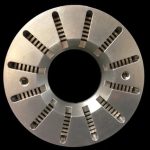
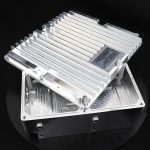
303 stainless steel is best for high machinability, while 304 and 316 stainless steel are preferred for corrosion resistance. 17-4 PH is suitable for high-strength applications.
Stainless steel is more challenging to machine than aluminum because of its hardness and work-hardening characteristics. However, professional CNC machining providers can achieve precise tolerances with proper tooling and cutting strategies.
Precision CNC machining can typically achieve tolerances around ±0.005 mm to ±0.02 mm depending on part geometry, material grade, machining process, and inspection requirements.
Common finishes include:Brushed finish,Polishing,Bead blasting,Passivation,Electropolishing
The lead time for aluminum CNC machining usually ranges from a few days to several weeks, depending on part complexity, quantity, finishing requirements, and inspection needs. Simple prototypes can often be completed within 3–7 days, while production parts may require additional time for surface treatments and quality checks.
Stainless steel provides higher strength and corrosion resistance, while aluminum offers lower weight and faster machining. The best choice depends on application requirements.
From prototypes to low-volume production, Kintec Machining delivers high-quality stainless steel CNC machining services with tight tolerances, reliable lead times, and professional manufacturing support.
Upload your CAD files today and get a fast quote for your stainless steel CNC parts.
Send your drawings for a free review and quick quote. Our engineers are here to help.
ISO certified | Fast delivery | Factory Direct