


Call us and get your quote!
10% Off Your First Custom Part
-Start Today!
Send your drawings for a free review and quick quote. Our engineers are here to help.
ISO certified | Fast delivery | Factory Direct

PTFE coating, also known as polytetrafluoroethylene coating, is a low-friction surface coating used on CNC machined components to reduce friction, improve release properties, and provide resistance to chemicals, moisture, and elevated temperatures. PTFE coatings are commonly used on metal parts that require smooth movement, non-stick performance, and reduced surface wear.
PTFE is a fluoropolymer with a very low coefficient of friction and strong chemical resistance. When applied as a coating, PTFE forms a smooth surface that reduces direct contact between mating components and helps minimize friction and sticking.
Depending on the coating formulation, PTFE systems can also provide wear resistance, corrosion protection, and high-temperature performance. IFT lists PTFE among its dry-film lubricant coating materials and identifies low friction, chemical resistance, corrosion resistance, and wear resistance as key characteristics.
PTFE stands for polytetrafluoroethylene, a fluoropolymer known for its low friction, chemical resistance, non-stick properties, and thermal stability.
PTFE is commonly associated with the Teflon® brand, although PTFE is the generic material name. Different coating formulations can combine PTFE with binders, pigments, primers, or other materials to achieve specific performance requirements.
PTFE has a naturally low coefficient of friction because of its molecular structure and fluorine-rich surface. PTFE coating systems can therefore provide a slippery surface that reduces friction between contacting components.
Typical PTFE coating data show low static and dynamic coefficients of friction, although actual performance varies according to the coating formulation, load, speed, substrate, and operating environment.
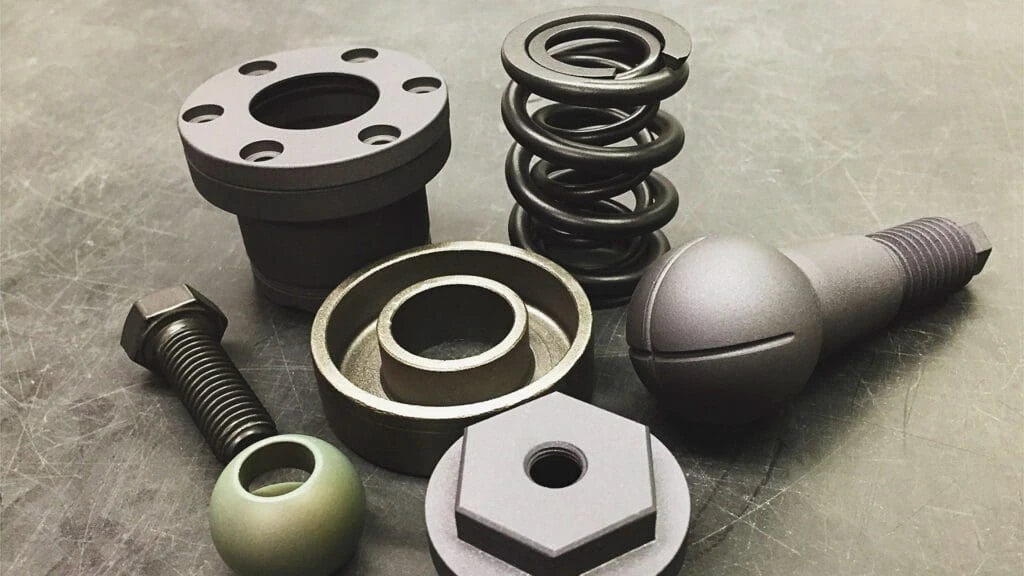
PTFE coating can provide multiple functional benefits for precision CNC components, including low friction, non-stick performance, chemical resistance, corrosion resistance, and temperature resistance.
The appropriate coating formulation should be selected according to the part’s operating temperature, load, friction requirements, substrate, and environment.
PTFE creates a low-friction surface that reduces resistance between contacting components. This can help improve sliding performance and reduce friction-related energy loss.
PTFE dry-film lubricant systems are commonly selected for moving components where conventional liquid lubricants are difficult to use or where a clean, dry lubricating surface is preferred. IFT identifies low friction and lubricity as key characteristics of PTFE dry-film coatings.
Yes. PTFE is highly resistant to many chemicals and aggressive environments. This makes PTFE coatings useful for components exposed to chemical processing, solvents, moisture, and corrosive substances.
However, chemical resistance depends on the specific PTFE coating system, temperature, exposure time, and chemical concentration.
PTFE has strong thermal stability compared with many conventional organic coatings. Published Teflon® coating data list a continuous maximum use temperature of approximately 260°C (500°F) for PTFE, although the actual operating limit depends on the complete coating system and application.
Yes. PTFE has strong release and non-stick characteristics, which can help prevent materials from adhering to coated surfaces.
This makes PTFE coating useful for molds, tooling, processing equipment, sliding components, and other applications where release performance is important.
PTFE itself is primarily selected for low friction and release properties, but engineered PTFE coating systems can also provide useful abrasion and wear resistance.
The actual wear performance depends on the PTFE formulation, coating thickness, substrate preparation, load, speed, temperature, and mating material. Published coating data show that PTFE systems can be evaluated for abrasion and scratch resistance, but these values vary between formulations.
PTFE coatings can be applied to a variety of metal substrates when the surface is properly prepared and the coating system is compatible with the material.
| Material | PTFE Coating Suitability | Typical Applications |
|---|---|---|
| Aluminum | Excellent | Lightweight sliding components, tooling |
| Stainless Steel | Excellent | Chemical-resistant components |
| Carbon Steel | Excellent | Industrial machinery and tooling |
| Alloy Steel | Excellent | Wear and friction applications |
| Brass | Good | Mechanical and electrical components |
| Good | Specialized applications | |
| Titanium | Application dependent | Aerospace and precision components |
IFT identifies PTFE dry-film lubricant coatings for substrates including aluminum, titanium, chromium, nickel, copper, brass, steel, stainless steel, and other metals.
Yes. Aluminum components can be PTFE coated when the surface is appropriately cleaned and prepared. PTFE can add low-friction and non-stick properties while retaining the lightweight characteristics of aluminum.
Yes. Stainless steel is a common substrate for specialty PTFE coatings. The combination can provide corrosion-resistant base material with a low-friction, chemically resistant surface.
Yes. Carbon steel and alloy steel components can receive PTFE coatings for applications requiring reduced friction, release properties, or chemical resistance.
The PTFE coating process typically involves surface preparation, coating application, curing, and inspection.
A typical manufacturing sequence is:
CNC Machining → Cleaning → Surface Preparation → Primer Application → PTFE Coating → Thermal Curing → Inspection
The exact process varies according to the coating system, substrate, part geometry, required thickness, and performance requirements.
Surface preparation is critical for coating adhesion. CNC parts may undergo cleaning, degreasing, abrasive blasting, chemical treatment, or other preparation methods depending on the substrate and coating system.
Proper preparation removes machining oils, contaminants, oxides, and other surface conditions that could interfere with adhesion.
PTFE coatings can be applied using processes such as spraying or other controlled coating methods depending on the coating formulation and component geometry.
IFT lists spray, dip-spin, and tumble-spray processes among its coating capabilities for dry-film lubricant systems.
Many PTFE coating systems require controlled thermal curing after application. The coating is heated according to the manufacturer’s specified temperature and time to develop the required film properties.
The curing temperature varies by coating formulation. Published Teflon® coating data show different cure ranges for PTFE, FEP, PFA, and ETFE systems.
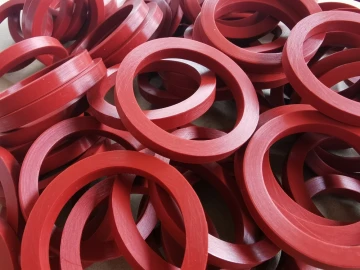
PTFE coating thickness depends on the specific coating system and application requirements. Thin-film systems are commonly used where low friction and minimal dimensional buildup are important, while thicker systems may be selected for specific wear, release, or corrosion requirements.
The required thickness should be specified according to the coating manufacturer’s technical data and the component’s functional requirements.
Yes. Although PTFE coatings can be applied as relatively thin films, the coating still adds material to the surface and can affect precision fits, holes, threads, and mating surfaces.
For tight-tolerance CNC components, coating thickness should be considered during the machining plan.
A typical sequence may be:
Rough Machining → Surface Preparation → PTFE Coating → Final Inspection
For critical dimensions, masking or post-coating finishing may be required depending on the coating specification.
PTFE coating is generally applied after the main CNC machining operations. However, the exact sequence depends on coating thickness, dimensional tolerances, masking requirements, and whether specific surfaces must remain uncoated.
Critical functional surfaces should be identified on the engineering drawing before production.
PTFE coatings are used when components require low friction, non-stick performance, chemical resistance, or controlled surface lubrication.
PTFE coating can be used on selected aerospace components where low friction, chemical resistance, and controlled surface performance are required.
Applications can include sliding components, seals, mechanical parts, tooling, and components where reduced friction or release properties are important.
PTFE coating is useful for shafts, guides, mechanical components, tooling, and machinery parts exposed to repeated sliding contact.
PTFE’s chemical resistance makes it suitable for selected components exposed to aggressive chemicals, solvents, and corrosive environments.
PTFE coatings can provide release and non-stick properties that help reduce material adhesion to tooling surfaces.
PTFE’s low-friction and non-stick characteristics can be useful for selected food-processing components. The coating system must meet the applicable regulatory and application requirements.
| Advantages | Limitations |
|---|---|
| Very low friction | Relatively soft compared with hard metallic coatings |
| Excellent release properties | Coating can wear under severe abrasion |
| Strong chemical resistance | Requires proper surface preparation |
| Good temperature resistance | Cure temperature may affect some substrates |
| Low moisture absorption | Coating thickness can affect tight fits |
| Can reduce the need for liquid lubricants | Performance depends on coating formulation |
The main advantages of PTFE coating are low friction, non-stick performance, chemical resistance, thermal stability, and reduced surface adhesion. These properties make PTFE useful for precision mechanical components, tooling, chemical equipment, and sliding applications.
PTFE coatings are not appropriate for every high-wear or high-load application. The coating system must be selected according to contact pressure, sliding speed, temperature, chemical exposure, and substrate.
For severe abrasion, a harder coating or a different surface treatment may provide better long-term performance.
PTFE coating and anodizing provide different surface properties and are normally selected for different applications.
| Feature | PTFE Coating | Anodizing |
|---|---|---|
| Main Property | Low friction and release | Surface hardness and corrosion resistance |
| Common Materials | Many metals | Primarily aluminum |
| Friction | Very low | Higher |
| Non-Stick Performance | Excellent | Limited |
| Chemical Resistance | Excellent | Good |
| Electrical Conductivity | Depends on system | Generally reduced |
| Surface Hardness | Relatively low | Higher |
| Typical Use | Sliding, release, lubrication | Protective and decorative aluminum finish |
PTFE is generally selected when low friction and release properties are the primary requirements, while anodizing is often selected when aluminum needs a harder protective surface.
PTFE is one of several fluoropolymer coating materials. Other systems include FEP, PFA, and ETFE.
| Coating | Key Characteristics | Typical Consideration |
|---|---|---|
| PTFE | Low friction, release, chemical resistance | Sliding and non-stick applications |
| FEP | Release properties and chemical resistance | Applications requiring melt-processable fluoropolymer |
| PFA | Chemical resistance and high-temperature capability | Demanding chemical environments |
| ETFE | Higher mechanical strength and chemical resistance | Applications requiring greater toughness |
Published coating data show differences in mechanical and thermal properties among PTFE, FEP, PFA, and ETFE, so the coating should be selected based on the actual operating requirements rather than simply choosing a fluoropolymer by name.
A clear PTFE coating specification should define the substrate, coating type, thickness, surface preparation, color, curing requirements, and critical dimensional requirements.
A typical drawing or purchase specification can include:
Base material
PTFE coating type
Coating thickness
Color
Surface preparation
Primer requirement
Cure requirements
Masking areas
Critical dimensions
Friction or release requirements
Chemical or temperature exposure
Inspection requirements
For demanding applications, the coating supplier’s technical specification should be referenced to ensure that the selected coating is suitable for the operating environment.
PTFE-coated CNC components are used across industries where low friction, chemical resistance, release properties, or temperature resistance are important.
| Industry | Typical Applications | Main Requirement |
|---|---|---|
| Aerospace | Sliding components, tooling | Low friction and durability |
| Automotive | Mechanical components, tooling | Reduced friction |
| Chemical | Valves, components, equipment | Chemical resistance |
| Industrial Machinery | Guides, shafts, tooling | Lubricity and wear control |
| Medical Equipment | Selected precision components | Low friction and clean surface |
| Food Processing | Processing equipment and tooling | Release and non-stick performance |
| Electronics | Precision mechanical components | Low friction and chemical resistance |
Kintec Machining combines precision CNC machining with secondary surface finishing to provide production-ready components with the required dimensional and functional performance.
Our CNC manufacturing capabilities include:
Rapid prototyping
Low-volume production
PTFE coating
Dimensional inspection
Our engineers can review your CAD files, material, tolerances, coating thickness, operating temperature, friction requirements, and application to help determine an appropriate PTFE coating solution.
.
Choose PTFE coating when your CNC machined components require low friction, non-stick performance, chemical resistance, temperature resistance, and controlled surface lubrication.
Send your CAD files and technical drawings to Kintec Machining. Our engineers can help evaluate the material, coating type, thickness, CNC tolerances, operating environment, and performance requirements to develop the right PTFE coating solution for your parts.
Send your drawings for a free review and quick quote. Our engineers are here to help.
ISO certified | Fast delivery | Factory Direct