


Call us and get your quote!
10% Off Your First Custom Part
-Start Today!
Send your drawings for a free review and quick quote. Our engineers are here to help.
ISO certified | Fast delivery | Factory Direct

Black oxide is a chemical conversion coating that creates a uniform black finish on steel and stainless steel CNC machined parts. It improves appearance, reduces glare, provides mild corrosion resistance, and causes minimal dimensional change, making it suitable for precision components requiring tight tolerances.
Black oxide converts the surface of suitable metals into a thin magnetite layer through a controlled chemical reaction. Unlike paint or plating, it does not create a conventional additive coating, so the finished part retains nearly its original dimensions. A post-treatment oil, wax, or other sealant can improve corrosion protection and appearance.
The process typically includes cleaning, rinsing, surface preparation, black oxide treatment, rinsing, and sealing. The metal reacts with an alkaline oxidizing solution to form a black magnetite layer, while the final sealant helps protect the porous oxide surface from moisture and corrosion.
Black oxide causes negligible dimensional change because it converts the existing metal surface rather than building a relatively thick external coating. This makes it useful for precision CNC parts, threaded components, gears, and assemblies where maintaining dimensional tolerances is important.
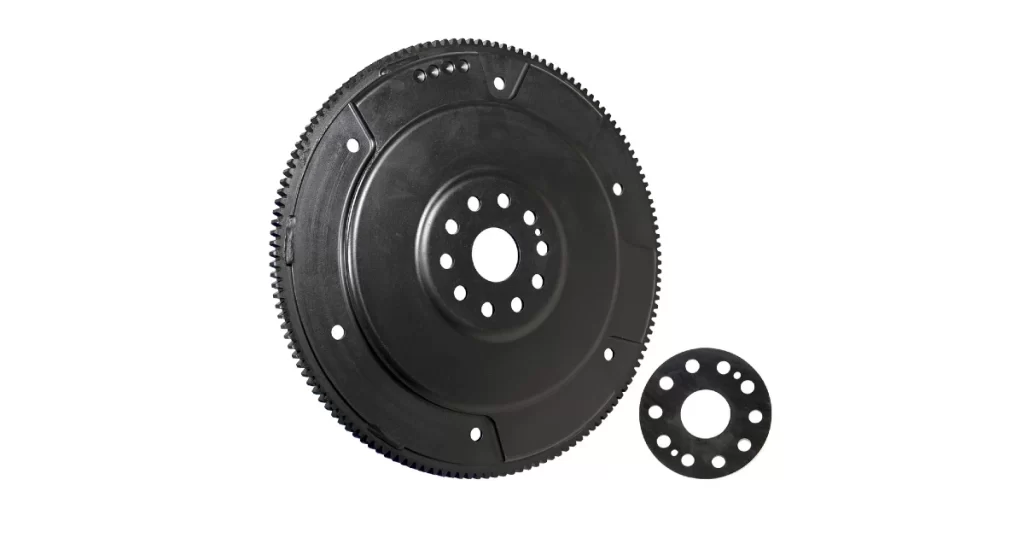
Black oxide provides a combination of a uniform black appearance, reduced glare, mild corrosion protection, improved lubricity, and minimal dimensional change. It is a practical finish when a component needs both functional surface protection and a consistent black appearance without significantly changing its dimensions.
Black oxide provides mild corrosion resistance, especially when the porous oxide layer is sealed with oil, wax, or another protective treatment. The sealant helps prevent moisture from reaching the underlying metal. Black oxide is generally better suited to indoor or controlled environments than severe outdoor or marine conditions.
Black oxide can provide some resistance to minor surface wear and scuffing, particularly when combined with a suitable oil sealant. However, it is not primarily a hardening treatment and should not be selected when a component requires a highly wear-resistant hardened surface.
The dark, non-reflective surface of black oxide absorbs more light than untreated bright metal surfaces. This makes it useful for components where reduced reflection is important, including optical, inspection, tooling, and industrial equipment applications.
Yes. The porous structure of the black oxide surface can retain oil and other lubricants. This can reduce friction and help improve the running characteristics of selected moving components, threaded parts, and mechanical assemblies.
Black oxide is most commonly used on ferrous materials such as carbon steel, alloy steel, stainless steel, and cast iron. Specialized black oxide processes can also be used for selected non-ferrous metals, but the chemistry and resulting finish differ from standard steel black oxide.
| Material | Black Oxide Suitability | Typical Purpose |
|---|---|---|
| Carbon Steel | Excellent | Appearance, mild corrosion protection |
| Alloy Steel | Excellent | Functional protection and appearance |
| Stainless Steel | Specialized | Black appearance and glare reduction |
| Tool Steel | Good | Tooling and precision components |
| Cast Iron | Good | Appearance, lubricity, mild protection |
| Copper | Specialized | Decorative dark finish |
| Brass | Specialized | Decorative dark appearance |
Yes. Carbon steel is one of the most common materials for black oxide treatment. The process creates a uniform dark surface while preserving the dimensions and mechanical properties of the CNC machined component.
Yes. Alloy steels such as 4140 can be black oxide coated after CNC machining or heat treatment. The finish provides a consistent black appearance and mild corrosion protection without significantly changing the dimensions of the component.
Yes, but stainless steel requires a specialized black oxide process because its chromium-rich passive surface behaves differently from carbon and alloy steels. The appropriate process should be selected according to the stainless steel grade and required finish.
The black oxide process uses controlled chemical treatment to convert the metal surface into a black oxide layer.
A typical process is:
Cleaning → Rinsing → Surface Preparation → Black Oxide Treatment → Rinsing → Sealing
The exact chemistry and process parameters depend on the material and required finish. Hot black oxide commonly uses an alkaline bath at elevated temperature, followed by rinsing and an oil, wax, or other sealant.
The CNC machined surface must be clean and free from oil, grease, cutting fluids, rust, scale, and other contaminants. Proper surface preparation helps produce a more uniform chemical reaction and consistent black appearance.
Sealing is important because the black oxide layer itself provides only limited corrosion protection. Oil, wax, or another suitable sealant fills the porous surface and provides additional protection against moisture and oxidation.
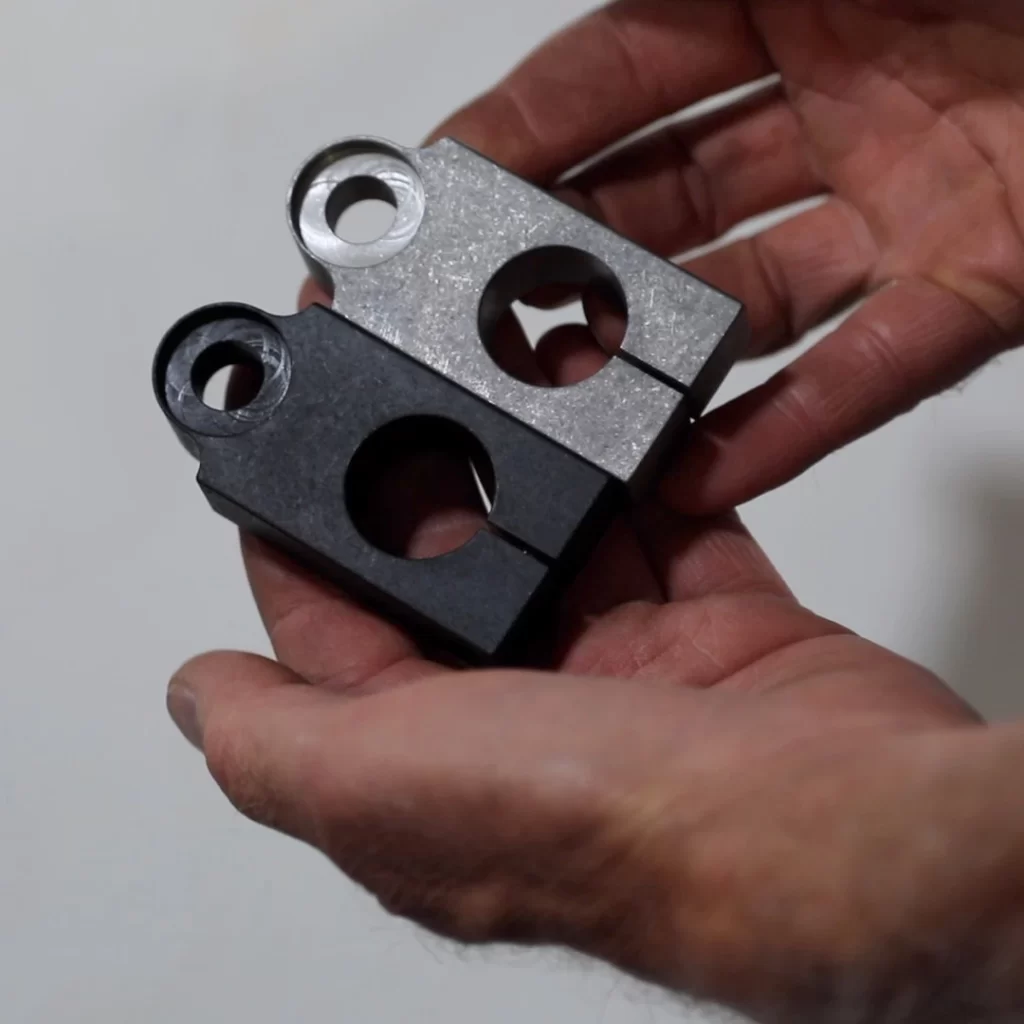
Black oxide is well suited to precision CNC machined parts because the conversion layer causes minimal dimensional change. Unlike thicker coatings, it generally does not require significant dimensional compensation for the coating thickness.
For critical components, engineers should still consider the complete manufacturing sequence:
CNC machining → deburring and cleaning → black oxide → sealing → final inspection
Yes. Black oxide follows the underlying surface condition rather than hiding machining marks or surface defects. A smoother machined surface generally produces a more consistent appearance, while rougher surfaces can result in a more matte appearance.
For most precision components, the machining sequence should be planned around the required final dimensions and surface condition. Because black oxide causes minimal dimensional change, it can often be applied after machining, but critical fits and functional surfaces should be reviewed before production.
Black oxide is a cost-effective surface finish when a CNC component needs a black appearance, mild corrosion protection, reduced glare, and minimal dimensional change.
| Advantages | Limitations |
| Uniform black appearance | Limited corrosion protection |
| Minimal dimensional change | Requires sealing for better protection |
| Reduces glare | Not suitable for severe environments without additional protection |
| Provides mild wear resistance | Thin finish can wear under heavy abrasion |
| Improves lubricity | Does not significantly increase hardness |
| Cost-effective | Material compatibility varies |
The main advantages include minimal dimensional change, consistent black appearance, reduced glare, mild corrosion resistance, improved lubricity, and relatively low processing cost. These characteristics make black oxide useful for precision mechanical components and industrial hardware.
Black oxide does not provide the same level of corrosion protection as thicker coatings such as zinc plating or some industrial paint systems. It also does not substantially increase the hardness of the underlying metal. For harsh outdoor, marine, or highly abrasive environments, another surface treatment may be more appropriate.
Black oxide is commonly selected for CNC components that require a dark appearance, mild corrosion protection, reduced reflection, or dimensional stability.
Black oxide can be used on selected automotive fasteners, gears, shafts, brackets, and mechanical components where a black finish and basic surface protection are required.
Industrial machinery components such as shafts, fixtures, gears, bushings, and mechanical hardware can benefit from the combination of a black appearance, mild corrosion protection, and minimal dimensional change.
Black oxide is widely used for tools, fasteners, fixtures, and hardware because it provides a consistent dark finish while retaining the original dimensions of the component.
Selected non-implant medical and precision equipment components can use black oxide when a non-reflective surface and dimensional stability are important. Material compatibility and applicable industry requirements should always be verified before production.
The low-reflective black surface can be useful for components exposed to strong lighting or optical systems where unwanted surface reflection needs to be minimized.
Black oxide and anodizing are different surface finishing processes designed for different material groups.
| Feature | Black Oxide | Anodizing |
| Process Type | Chemical conversion | Electrochemical |
| Common Materials | Steel, stainless steel | Aluminum, titanium |
| Typical Color | Black | Multiple colors |
| Dimensional Change | Minimal | Greater than black oxide |
| Corrosion Protection | Mild | Generally higher |
| Main Benefits | Black finish, low dimensional change, lubricity | Corrosion resistance, hardness, appearance |
Black oxide is generally selected for ferrous CNC machined parts, while anodizing is commonly used for aluminum components.
A clear black oxide specification should identify the material, desired appearance, sealing method when required, and any critical dimensional or inspection requirements.
A CNC drawing or purchase specification can include:
For precision components, specifying the material and functional requirements helps the manufacturer select an appropriate black oxide process.
Kintec Machining combines CNC machining with secondary surface finishing to produce production-ready precision components.
Our manufacturing capabilities include:
Our engineers can review your CAD files, material grade, tolerances, surface requirements, and application to help determine whether black oxide is suitable for your CNC machined parts.
.
Choose black oxide when your CNC machined components require a uniform black finish, mild corrosion protection, reduced glare, improved lubricity, and minimal dimensional change.
Send your CAD files and technical drawings to Kintec Machining for a customized CNC machining and Black Oxide finishing solution.
Send your drawings for a free review and quick quote. Our engineers are here to help.
ISO certified | Fast delivery | Factory Direct