


Call us and get your quote!
10% Off Your First Custom Part
-Start Today!
Send your drawings for a free review and quick quote. Our engineers are here to help.
ISO certified | Fast delivery | Factory Direct

Nitriding is a thermochemical surface hardening process that diffuses nitrogen into the surface of metal parts to increase surface hardness, wear resistance, fatigue strength, and service life. Unlike conventional hardening processes, nitriding typically operates below the transformation temperature of steel and does not require quenching, which helps minimize dimensional distortion.
For CNC machined components, nitriding is particularly useful when a part needs a hard, wear-resistant surface while retaining a tougher core. Common applications include gears, shafts, crankshafts, camshafts, molds, dies, hydraulic components, and precision industrial machinery.
Kintec Machining combines CNC machining with post-processing solutions to manufacture precision components according to material, hardness, tolerance, and application requirements.
Nitriding is a thermochemical heat treatment that introduces nitrogen into the surface of a metal component. Nitrogen atoms diffuse into the material and react with alloying elements such as chromium, aluminum, molybdenum, and vanadium to form hard nitrides.
The result is a hardened surface layer with improved resistance to wear, friction, fatigue, and surface deformation while the core of the component retains much of its original toughness.
Nitriding is generally performed at approximately 480–590°C for steels, below the material’s transformation temperature. Because no rapid quenching is normally required, nitriding produces less dimensional distortion than many conventional hardening processes.
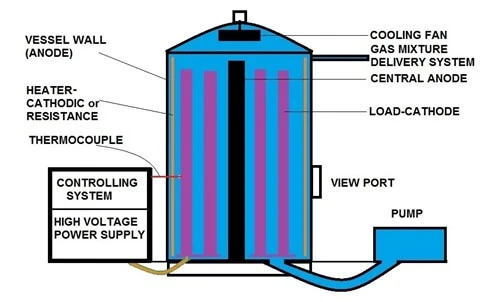
The nitriding process uses a controlled nitrogen-rich environment to diffuse nitrogen into the surface of a metal component.
A typical CNC nitriding process includes:
CNC machining and preparation – The component is machined to the required geometry and prepared for heat treatment.
Cleaning – Oil, grease, oxides, and other contaminants are removed from the surface.
Controlled heating – The component is heated to the required nitriding temperature.
Nitrogen diffusion – Nitrogen atoms penetrate the metal surface and react with suitable alloying elements.
Case formation – A hard nitrided layer develops at the surface.
Controlled cooling – The component is cooled without conventional quenching.
Inspection – Surface hardness, case depth, dimensions, and other specified requirements are verified.
The final case depth and hardness depend on the material, treatment temperature, treatment time, and nitriding method.
During nitriding, nitrogen atoms diffuse into the metal surface and form nitrides with elements such as chromium, aluminum, molybdenum, and vanadium.
This creates a hardened surface region while the underlying core remains comparatively tough. The combination of a hard surface and tougher core is useful for components exposed to repeated contact, sliding friction, and cyclic loading.
The three common nitriding methods are gas nitriding, plasma nitriding, and salt bath nitriding.
| Nitriding Process | How It Works | Main Advantage | Typical Applications |
|---|---|---|---|
| Gas Nitriding | Nitrogen is introduced through an ammonia-rich atmosphere | Suitable for batch production | Gears, shafts, automotive components |
| Plasma Nitriding | Nitrogen ions are generated in a controlled plasma environment | Precise control of surface treatment | Precision components, tooling |
| Salt Bath Nitriding | Parts are immersed in a nitrogen-containing molten salt | Fast surface treatment | Industrial wear-resistant components |
Gas nitriding uses an ammonia-rich atmosphere inside a controlled furnace. Ammonia decomposes during the process, allowing nitrogen to diffuse into the metal surface.
It is widely used for steel components that require increased surface hardness and wear resistance. Gas nitriding is particularly suitable for production components and larger batches.
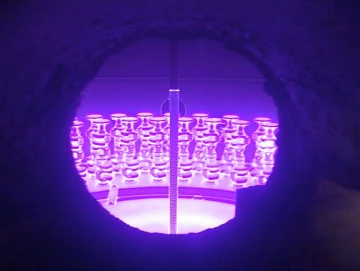
Plasma nitriding, also called ion nitriding, uses an electrical plasma environment to introduce nitrogen ions to the surface of a component.
It provides precise control over the nitriding atmosphere and surface treatment, making it suitable for precision components, complex geometries, and applications requiring controlled case characteristics.
Salt bath nitriding immerses components in a molten salt containing nitrogen-bearing compounds.
It can provide relatively rapid surface hardening, although gas and plasma nitriding are more commonly considered when precise process control and specific surface characteristics are required.
Nitriding works particularly well with steels containing nitride-forming alloying elements such as chromium, aluminum, molybdenum, and vanadium.
| Material | Nitriding Suitability | Typical Benefits |
|---|---|---|
| 4140 Alloy Steel | Excellent | Hardness, wear resistance, fatigue performance |
| 4340 Alloy Steel | Excellent | Wear resistance and high-load performance |
| Nitriding Steel | Excellent | High surface hardness and controlled case depth |
| H13 Tool Steel | Excellent | Mold and tooling wear resistance |
| D2 Tool Steel | Good | Surface hardness and wear resistance |
| Stainless Steel | Specialized | Surface hardness with controlled treatment |
| Cast Iron | Application dependent | Improved wear resistance |
| Titanium Alloys | Specialized | Surface hardness and wear resistance |
Dedicated nitriding steels and alloy steels are particularly responsive because their alloying elements can form stable nitrides during treatment. Stainless steels and titanium require specialized nitriding conditions because their chemistry and surface behavior differ from conventional alloy steels.
Alloy steels containing chromium, aluminum, molybdenum, and vanadium are commonly nitrided because these elements form hard and stable nitrides.
Materials such as 4140 and 4340 are frequently selected for components requiring improved surface hardness and wear resistance. Dedicated nitriding steels can provide even stronger responses because their compositions are specifically designed for nitrogen diffusion and nitride formation.
Yes. Stainless steel can be nitrided, but it often requires specialized processes.
The chromium-rich passive oxide layer on stainless steel can limit nitrogen diffusion. Low-temperature plasma nitriding is one approach used to modify the surface while helping preserve the material’s corrosion-resistant characteristics.
Nitriding provides several important performance advantages for CNC machined components.
Nitriding forms hard nitrogen-containing compounds near the surface of suitable metals. This creates a hardened case that is substantially harder than the untreated base material.
Depending on the material and process, nitrided surfaces can achieve very high hardness levels, making them suitable for components exposed to repeated contact and abrasive wear.
The hardened nitrided surface resists scratching, indentation, abrasion, and surface deformation.
This makes nitriding useful for moving components such as gears, shafts, camshafts, hydraulic components, and tooling that experience repeated surface contact.
Yes. Nitriding can improve fatigue performance by creating a hardened surface and beneficial residual stress conditions.
This is particularly valuable for components subjected to repeated mechanical loading, such as gears, crankshafts, shafts, and other rotating machinery components.
Nitriding generally produces less distortion than hardening processes that require high-temperature austenitizing followed by rapid quenching.
Because nitriding is performed below the transformation temperature of steel and normally does not require quenching, it is suitable for precision components where dimensional stability is important.
Nitriding can cause small dimensional changes even though its distortion risk is relatively low compared with conventional quench hardening.
For tight-tolerance CNC components, engineers should account for the nitriding process during the manufacturing plan.
A common approach is:
Rough machining → stress relief → semi-finish machining → nitriding → final inspection or controlled finishing
When final dimensions are critical, the drawing should specify:
Nitriding method
Required surface hardness
Required case depth
Dimensional tolerances
Critical functional surfaces
Inspection requirements
For precision components, Kintec Machining can evaluate the machining and nitriding sequence based on the part geometry and tolerance requirements.
Nitriding is widely used for components requiring high surface hardness, wear resistance, and fatigue performance.
Nitriding is commonly applied to:
Crankshafts
Camshafts
Gears
Transmission components
Valves
Shafts
These components benefit from improved resistance to repeated contact and mechanical wear.
Nitriding can be used for selected aerospace components where surface durability, fatigue performance, and dimensional stability are important.
Typical applications include precision shafts, actuator components, gears, and other high-performance mechanical components.
Nitrided tool steels can provide improved resistance to abrasive wear and repeated contact.
Applications include:
Injection molds
Forming dies
Press tools
Cutting tools
Tooling components
Nitriding is suitable for industrial components exposed to continuous friction, contact stress, and cyclic loads.
Common examples include gears, shafts, bearings-related components, hydraulic components, and mechanical transmission parts.
Hydraulic rods, valve components, and other precision moving parts can benefit from a hardened surface because these components experience repeated sliding contact and wear.
Both nitriding and carburizing are surface-hardening processes, but they use different diffusing elements and process conditions.
| Feature | Nitriding | Carburizing |
|---|---|---|
| Diffusing Element | Nitrogen | Carbon |
| Typical Steel Process Temperature | About 480–590°C | Typically higher than nitriding |
| Quenching | Normally not required | Normally required |
| Distortion Risk | Relatively low | Higher |
| Typical Case Depth | Relatively shallow | Can be deeper |
| Main Benefit | High surface hardness with dimensional stability | Deep hardened case |
| Typical Applications | Precision gears, shafts, tooling | Gears, shafts, heavy-load components |
Nitriding is often preferred when dimensional stability and surface hardness are important. Carburizing can be more suitable when a deeper hardened case is required for heavy-load or impact applications.
Nitriding and induction hardening both improve surface hardness, but they use different mechanisms.
Nitriding introduces nitrogen through thermochemical diffusion, while induction hardening rapidly heats the surface using electromagnetic induction and then uses controlled cooling to harden the material.
Nitriding generally provides a controlled diffusion layer with low distortion, while induction hardening can produce a deeper hardened zone and is useful for selected steels requiring localized surface hardening.
Although nitriding offers significant benefits, it is not suitable for every material or application.
Important considerations include:
Not all metals respond effectively to conventional nitriding.
Treatment cycles can require significant processing time.
Case depth is generally shallower than some carburizing processes.
Surface preparation is important.
Excessive compound-layer formation may not be desirable for every application.
Specialized materials may require plasma or other controlled nitriding processes.
Final dimensional requirements should be considered before treatment.
For these reasons, material selection and nitriding specifications should be established before production.
A clear nitriding specification should define the required performance rather than simply stating “nitriding.”
A typical specification can include:
Material: 4140 alloy steel
Heat Treatment: Nitriding
Surface Hardness: Required hardness range
Case Depth: Required effective case depth
Process: Gas or plasma nitriding, if specified
Critical Dimensions: Final machining tolerances
Inspection: Hardness and dimensional inspection
The exact requirements should be determined according to the component’s operating conditions, material grade, geometry, and engineering standards.
Nitrided CNC parts are used in industries where surface durability and dimensional stability are important.
| Industry | Typical Nitrided Components | Main Requirement |
|---|---|---|
| Aerospace | Shafts, gears, actuators | Fatigue and wear resistance |
| Automotive | Crankshafts, camshafts, gears | Surface durability |
| Robotics | Shafts, gears, transmission parts | Wear resistance and precision |
| Industrial Machinery | Gears, shafts, tooling | Long service life |
| Mold & Die | Molds, dies, tooling | Surface hardness |
| Hydraulic Equipment | Rods, valves, precision components | Sliding wear resistance |
Kintec Machining provides CNC machining and post-processing solutions for precision metal components.
Our manufacturing capabilities include:
Precision machining
Rapid prototyping
Low-volume production
Nitriding
Dimensional inspection
Our engineers can evaluate your material, CAD drawing, tolerances, required hardness, case depth, and application to help determine an appropriate CNC machining and nitriding process.
For precision parts, integrating machining and surface treatment planning from the beginning can help reduce dimensional risks and unnecessary secondary operations.
.
Yes. 4140 is commonly used for nitriding because its chromium and molybdenum content allows the formation of hard nitrides during treatment.
Improve the surface hardness, wear resistance, fatigue performance, and service life of your CNC machined components with the right nitriding process.
Send your CAD files and technical drawings to Kintec Machining. Our engineers can help evaluate the material, CNC machining tolerances, nitriding requirements, case depth, hardness, and final inspection for your application.
Send your drawings for a free review and quick quote. Our engineers are here to help.
ISO certified | Fast delivery | Factory Direct