


Wear Resistance
Increased surface hardness · Type III provides higher wear resistance
Industrial components, mechanical parts

Anodizing is an electrochemical surface finishing process that converts the surface of aluminum and other suitable metals into a controlled oxide layer. It improves corrosion resistance, wear resistance, surface durability, and appearance while providing clear, matte, and colored finish options.
Key benefits include:
✓ Improves corrosion and environmental resistance
✓ Increases surface hardness and wear resistance
✓ Provides consistent color and surface appearance
✓ Creates a durable oxide layer integrated with the metal
✓ Suitable for precision CNC machined aluminum parts
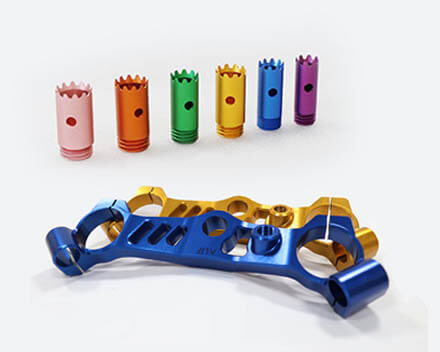
Anodizing is widely used for CNC machined aluminum parts because it combines corrosion protection, wear resistance, and cosmetic improvement in one surface treatment. It is commonly used for aerospace, automotive, medical, electronics, robotics, and industrial components.
Different anodizing processes provide different oxide-layer thicknesses, hardness, corrosion resistance, and appearance. The appropriate anodizing type depends on the material, functional requirements, dimensional tolerances, and desired surface finish. Type I, Type II, and Type III are the most common anodizing processes for CNC components.

Type I anodizing uses chromic acid to create a relatively thin anodic oxide layer. It provides corrosion protection while minimizing coating thickness and is commonly selected for lightweight aerospace components.
Applications
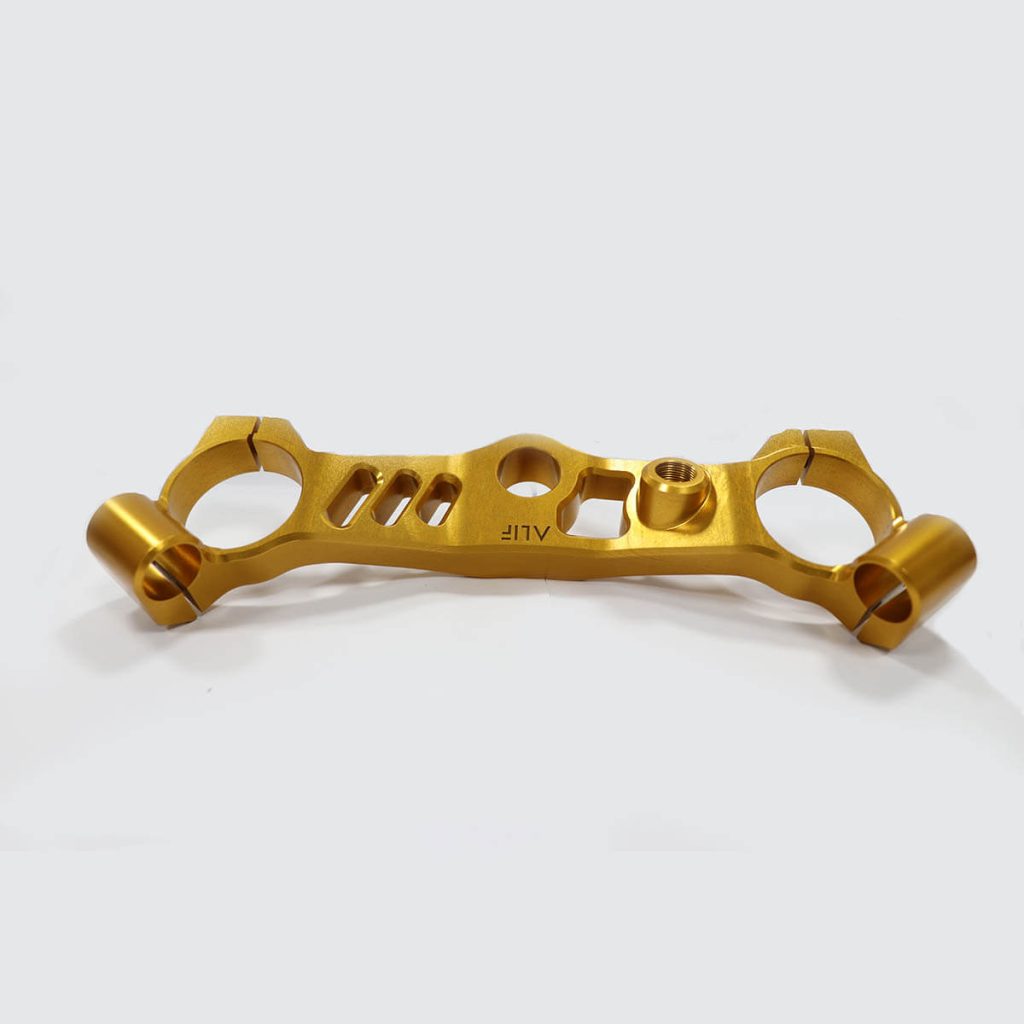
Type II anodizing typically uses sulfuric acid to create a durable oxide layer with good corrosion resistance and a wide range of color options. It is one of the most common anodizing finishes for CNC aluminum parts.
Applications
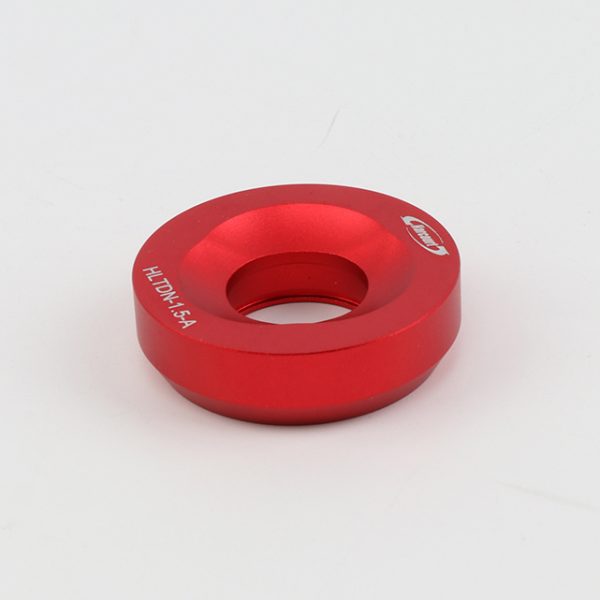
Type III hardcoat anodizing creates a thicker and harder oxide layer for CNC components requiring enhanced wear, abrasion, and surface durability. Hardcoat anodizing is commonly selected for demanding industrial and functional applications.
Applications
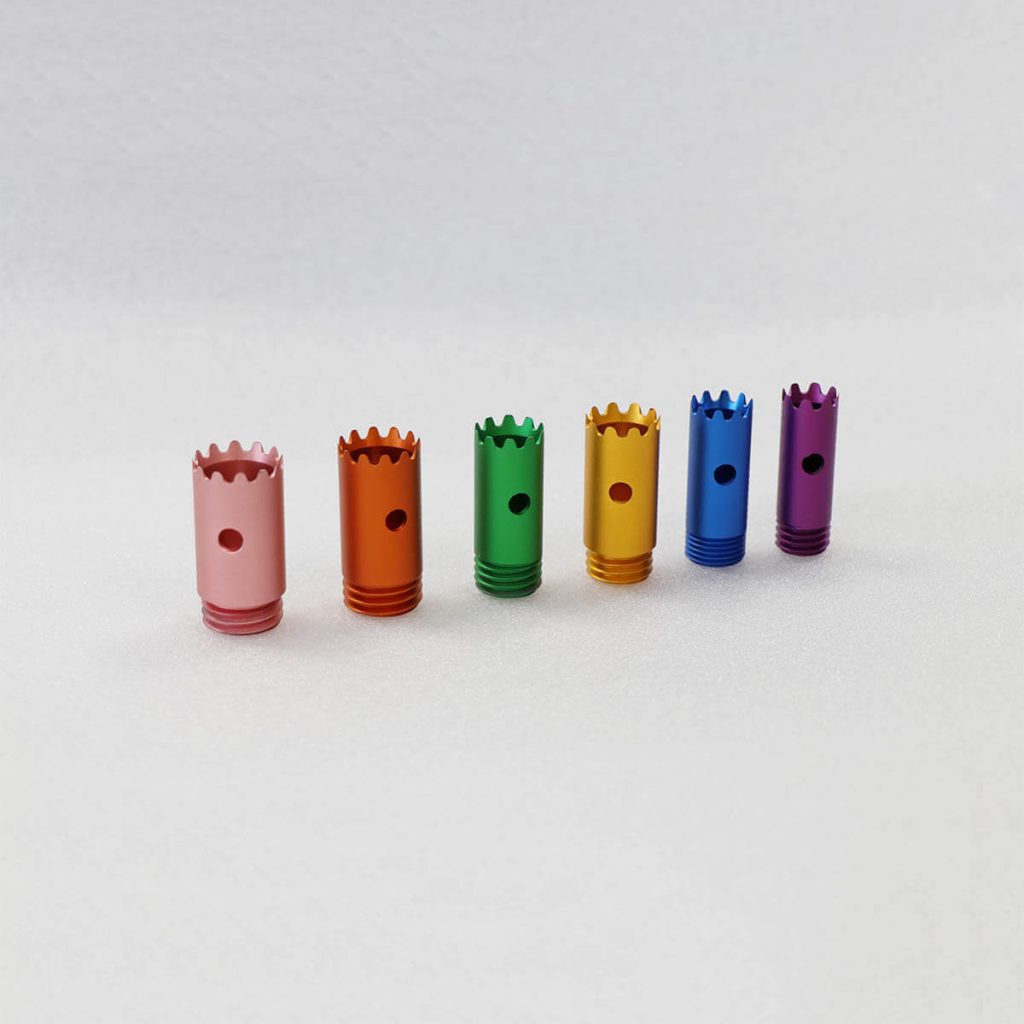
Colored anodizing provides both surface protection and decorative appearance by introducing color into the porous anodic layer. It is commonly used when CNC aluminum parts require consistent colors and improved cosmetic quality.
Applications
Anodizing uses an electrochemical reaction to convert the metal surface into an anodic oxide layer. The CNC part acts as the anode and is immersed in an electrolyte bath while electrical current promotes controlled oxide-layer formation.
01
CNC parts are cleaned and prepared before anodizing. Mechanical finishing, etching, or other surface treatments can be used to establish the required appearance because anodizing follows the existing surface condition rather than hiding machining marks.
02
The part is connected to the positive terminal and immersed in an electrolyte bath. When electrical voltage is applied, oxygen ions react with the metal surface to form a controlled oxide layer.
03
For colored anodizing, dyes or electrolytic coloring methods can be used to create black, bronze, blue, and other finishes depending on the anodizing process and required appearance.
03
After anodizing and coloring, the microscopic pores in the oxide layer can be sealed to improve corrosion resistance and protect the finished surface from contaminants.
Anodizing is widely used in industries that require corrosion-resistant, wear-resistant, durable, and visually consistent CNC components. Aluminum anodizing is particularly common for aerospace, automotive, electronics, medical, and industrial applications.
Anodizing is most commonly applied to aluminum and aluminum alloys. Certain other non-ferrous metals, including titanium, magnesium, zinc, niobium, and tantalum, can also be anodized using suitable processes.
| Material | Anodizing Result | Common Applications |
|---|---|---|
| Aluminum | Durable oxide layer with clear or colored finish | Aerospace, electronics |
| Titanium | Controlled oxide layer and surface coloration | Medical, aerospace |
| Magnesium | Protective anodized surface | Automotive, aerospace |
| Zinc | Specialized anodized surface treatment | Industrial components |
| Tantalum | Controlled oxide layer and coloration | Medical, specialty components |
Anodizing modifies important surface properties including hardness, thickness, color, porosity, corrosion resistance, and wear resistance. Process parameters such as time, voltage, electrolyte composition, temperature, and current density affect the final anodized surface.
| Technical Parameters | Technical Parameters | Application Cases |
|---|---|---|
Corrosion Resistance
Protective oxide layer · Sealed surface improves environmental resistance
Aerospace parts, outdoor equipment
Wear Resistance
Increased surface hardness · Type III provides higher wear resistance
Industrial components, mechanical parts
Surface Appearance
Clear, colored, matte, or controlled cosmetic finish
Electronics, automotive, consumer products
Coating Thickness
Typical anodized coatings around 8–16 μm · Hardcoat can reach about 35–50 μm
Precision CNC parts, functional components
Dimensional Integrity
Oxide layer growth must be considered for tight tolerances
Precision holes, threads, sealing surfaces
Anodizing can be combined with CNC machining, sheet metal fabrication, and rapid prototyping to provide complete manufacturing and surface finishing solutions for aluminum components.
01 · CNC MACHINING
Anodizing is commonly applied to CNC milled and turned aluminum parts to improve corrosion resistance, wear resistance, surface durability, and appearance.
Supported Processes
Precision machining
02 · SHEET METAL
Anodizing gives aluminum prototypes a production-style surface finish, helping engineers evaluate appearance, color, corrosion resistance, and surface durability before mass production.
Applications
Metal enclosures
Machine covers
Industrial panels
03 · RAPID PROTOTYPING
Anodizing gives aluminum prototypes a production-style surface finish, helping engineers evaluate appearance, color, corrosion resistance, and surface durability before mass production.
Although anodizing provides a durable and consistent surface finish, improper surface preparation, process parameters, coloring, or dimensional allowances can cause uneven colors, surface defects, and tolerance problems.
• Inconsistent surface preparation
• Different aluminum alloys or material batches
• Uneven anodizing parameters
• Variations in coating thickness
• Standardize pre-treatment processes
• Use consistent aluminum grades
• Control anodizing parameters
• Maintain controlled coating thickness
Anodizing creates an oxide layer that becomes integrated with the metal surface, so coating growth can affect critical features such as holes, threads, and mating surfaces.
• Account for anodizing thickness during CNC design
• Control coating thickness
• Mask critical tolerance areas when required
• Inspect dimensions after finishing
• Poor surface preparation
• Existing scratches or machining marks
• Inconsistent pre-treatment
• Improve CNC surface preparation
• Use polishing, brushing, or bead blasting when appropriate
• Maintain consistent pre-anodizing surface quality
Anodizing does not hide underlying machining marks or scratches; the final anodized appearance follows the original surface condition.
The oxide layer can influence the dimensions of tight-fit features such as threads, holes, and sealing surfaces.
• Allow for coating thickness during design
• Mask critical functional areas when necessary
• Define critical tolerances on engineering drawings
• Perform dimensional inspection after anodizing
Type II anodizing is commonly selected for general corrosion protection and cosmetic finishes, while Type III hardcoat anodizing creates a thicker, harder oxide layer for applications requiring greater wear and abrasion resistance.
Yes. The porous anodic layer can be colored using dyeing or electrolytic coloring methods, allowing CNC aluminum parts to combine surface protection with decorative appearance.
Yes. Anodizing adds an oxide layer to the part surface, so coating thickness should be considered when designing tight-tolerance holes, threads, mating surfaces, and other critical features.
The anodized oxide layer is electrically insulating, although the underlying aluminum remains conductive. Areas that require electrical contact may need masking or another finishing approach.
Need CNC machined aluminum parts with improved corrosion resistance, wear resistance, and a consistent surface appearance? Kintec Machining provides precision CNC machining and professional anodizing solutions for prototypes, low-volume production, and custom industrial components.
Send your drawings for a free review and quick quote. Our engineers are here to help.
ISO certified | Fast delivery | Factory Direct