Component Manufacturing Companies: How to Evaluate a Real Fit
A quick search for component manufacturing companies returns hundreds of shops claiming the same capabilities — CNC milling, turning, 5-axis, “precision,” “quality,” “fast.” The website copy rarely tells you which of them actually own the equipment they list, which ones subcontract critical operations, or which ones will still hold your tolerance on the fiftieth batch instead of just the first sample. This guide covers what actually separates a dependable component manufacturer from one that just quotes well, and what to check before a drawing goes out.
What Component Manufacturing Companies Actually Provide
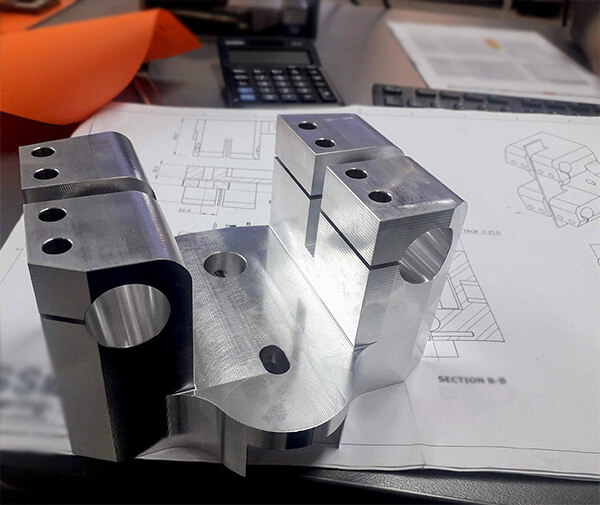
A component manufacturer takes a drawing or CAD model and produces a physical part to spec — usually through CNC milling, CNC turning, casting, or molding, depending on geometry and volume. The service itself sounds simple, but the difference between a good fit and a costly mismatch shows up in process control, documentation, and how the shop handles the inevitable design revision mid-program rather than in the initial capability list.
Full-Service Component Manufacturers vs Single-Process Shops vs Brokers
| Factor | Full-Service Component Manufacturer | Single-Process Shop | Sourcing Broker |
|---|---|---|---|
| Process range | Milling, turning, 5-axis, casting, finishing | One or two processes only | Depends on subcontractor network |
| Direct quality control | Yes — same facility | Yes | No — layered through subcontractor |
| Design change handling | Managed in-house | May require a second vendor | Slower — relayed through broker |
| Scalability | Prototype through production | Often limited to one volume tier | Depends on network capacity |
| Best fit | Multi-part assemblies, recurring programs | Single, simple components | Overflow capacity only |
Materials, Tolerances & Lead Times to Expect
A capable component manufacturer should be able to quote across multiple materials without pushing every project toward whichever alloy is easiest for their equipment.
| Material | Common Application | Typical Tolerance | Standard Lead Time |
|---|---|---|---|
| Aluminum 6061 / 7075 | Robotics housings, EV brackets, drone frames | ±0.013 mm | 3–5 days |
| Titanium Ti-6Al-4V | Aerospace structural components | ±0.005 mm | 5–8 days |
| Stainless 303 / 316L | Medical device components | ±0.013 mm | 4–7 days |
| Brass / Bronze | Connectors, electronics hardware | ±0.008 mm | 3–5 days |
| Engineering plastics (PEEK, Delrin) | Insulators, low-friction components | ±0.025 mm | 4–6 days |
Practical Examples by Industry
- Aerospace component programs: titanium structural fittings machined with CMM-verified inspection reports for regulatory documentation.
- Medical device manufacturing: stainless and PEEK components requiring passivation and lot-traceable material certification.
- Robotics & automation components: aluminum gearbox housings and structural brackets scaled from prototype into production.
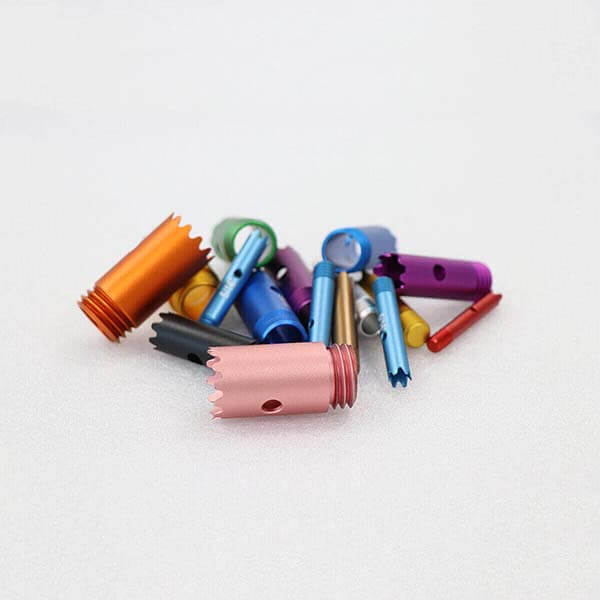
- Electronics component supply: Swiss-turned brass connectors held to tight concentricity across recurring orders.
- Automotive & EV components: sensor housings and brackets moved from prototype and preproduction into high-volume production without a supplier change.
Red Flags That Show Up After the Purchase Order, Not Before
Most sourcing mistakes aren’t visible in a sample review — they surface a few production cycles in, once switching suppliers is expensive and disruptive.
| Warning Sign | Why It’s Easy to Miss Early | Where It Shows Up Later |
|---|---|---|
| No CMM inspection as standard | Caliper checks pass on the sample part | A critical fit issue appears only at final assembly |
| Undisclosed subcontracting | First batch looks identical either way | Quality or lead time drops once volume increases |
| No documented revision control | Initial drawing matches what’s produced | A later engineering change applies inconsistently across batches |
| Single-process capability | First part fits their core process | A design change forces a second supplier mid-program |
How to Evaluate a Component Manufacturing Company Before Committing
Ask which processes are actually run in-house versus subcontracted, whether 5-axis machining and Swiss machining are owned equipment or outsourced when a quote mentions them, and how the shop documents inspection on every batch, not just first-article samples. Confirm quality certifications such as ISO 9001, and review case studies or equipment capabilities before sending a critical drawing. A small qualification order is a low-cost way to verify consistency before committing full program volume.
FAQ: Component Manufacturing Companies
What should I look for in a component manufacturing company?
In-house process range, documented inspection reporting, revision control on drawings, and the ability to scale from prototype to production without switching suppliers.
How do I know if a shop actually owns the equipment it quotes?
Ask directly, and check for equipment lists or facility details on their site; a shop unwilling to specify what’s run in-house versus subcontracted is worth questioning further.
Is there a minimum order to start with a component manufacturer?
No. A capable manufacturer quotes both a single prototype part and a full production run without requiring a minimum.
What documentation should a component manufacturer provide?
Material certificates and CMM inspection reports at minimum, with revision-tracked drawings for recurring or regulated programs.
Get Your Component Manufacturing Quote
Kintec runs milling, turning, 5-axis, and Swiss machining under one roof, with documented inspection on every batch from prototype through production.
- ✅ Milling, turning, 5-axis & Swiss capability in-house
- ✅ No minimum order — prototype from 1 piece
- ✅ Material certs and CMM reports on every order
- ✅ ISO 9001:2015 certified facility
- ✅ 24-hour quote turnaround
👉 Send your drawing now and get a free component manufacturing quote in 24 hours.