


Call us and get your quote!
10% Off Your First Custom Part
-Start Today!
Send your drawings for a free review and quick quote. Our engineers are here to help.
ISO certified | Fast delivery | Factory Direct

Carbon and alloy steel are widely used for CNC machining because they provide an excellent combination of strength, hardness, wear resistance, and cost efficiency. Carbon steel is commonly selected for general-purpose mechanical components, while alloy steel provides enhanced strength and performance for demanding applications.

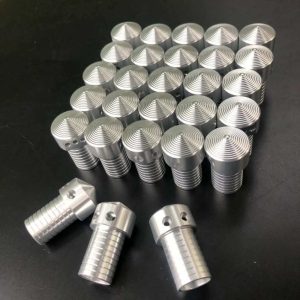
Different grades offer different levels of machinability, tensile strength, toughness, and heat-treatment capability. Common CNC machining grades include 1018, 1045, 4140, 4130, and 4340 steel.Kintec Machining provides precision carbon and alloy steel CNC machining services for prototypes, custom components, and low-volume production with tight tolerances and consistent manufacturing quality.
01
Carbon and alloy steels provide high mechanical strength, making them suitable for CNC machined components exposed to significant loads, pressure, and mechanical stress.Steel CNC parts are commonly used for:Shafts,Gears,Brackets,Machine components,Structural parts.
02
Many carbon and alloy steel grades provide excellent resistance to abrasion and mechanical wear.
This makes them suitable for components that experience repeated movement, friction, or contact with other mechanical parts.
03
Different steel grades can be selected based on the required combination of strength, hardness, toughness, and machinability.
Heat treatment can further modify the mechanical properties of certain alloy steels for demanding applications.
04
CNC milling and turning allow carbon and alloy steel to be manufactured into complex geometries with consistent dimensions and tight tolerances.Professional CNC machining can produce:Precision holes,Threads,Shafts,Grooves,Complex mechanical profiles.
05
Carbon steel is generally more economical than stainless steel, titanium, and other high-performance metals.
This makes carbon and alloy steel CNC machining an attractive option for high-volume industrial components where mechanical performance and manufacturing cost must be balanced.
06
Selecting the right steel grade is important for achieving the required combination of strength, machinability, hardness, toughness, and cost.The following grades are commonly used for CNC machined steel components.
Selecting the right steel grade is important for achieving the required combination of strength, machinability, hardness, toughness, and cost.The following grades are commonly used for CNC machined steel components.
| Tensile Strength, Yield (MPa) | Fatigue Strength (MPa) | Elongation at Break (%) | Hardness (Brinell) | Density (g/cm³) |
|---|---|---|---|---|
| 370 | 200 | 15 | 126 | 7.87 |
1045 carbon steel contains more carbon than 1018 steel, providing higher strength and hardness while maintaining good machinability.It is widely used for mechanical components that require greater strength and wear resistance.
| Tensile Strength, Yield (MPa) | Fatigue Strength (MPa) | Elongation at Break (%) | Hardness (Brinell) | Density (g/cm³) |
|---|---|---|---|---|
| 450 | 260 | 16 | 163 | 7.85 |
4140 alloy steel is a chromium-molybdenum steel known for its high strength, toughness, fatigue resistance, and heat-treatment capability.It is widely used for demanding mechanical components that require higher performance than standard carbon steels.
| Tensile Strength, Yield (MPa) | Fatigue Strength (MPa) | Elongation at Break (%) | Hardness (Brinell) | Density (g/cm³) |
|---|---|---|---|---|
| 655 | 500 | 25 | 197 | 7.85 |
4130 alloy steel is a chromium-molybdenum steel offering a good balance of strength, toughness, weldability, and fatigue resistance.It is frequently used in aerospace, automotive, motorsport, and structural applications.
..
| Tensile Strength, Yield (MPa) | Fatigue Strength (MPa) | Elongation at Break (%) | Hardness (Brinell) | Density (g/cm³) |
|---|---|---|---|---|
| 435 | 350 | 25 | 156 | 7.85 |
4340 alloy steel is a high-strength nickel-chromium-molybdenum steel known for excellent toughness, fatigue resistance, and heat-treatment capability.It is suitable for highly stressed components requiring superior mechanical performance.
| Tensile Strength, Yield (MPa) | Fatigue Strength (MPa) | Elongation at Break (%) | Hardness (Brinell) | Density (g/cm³) |
|---|---|---|---|---|
| 860 | 470 | 12 | 269 | 7.85 |
Carbon and alloy steel CNC machined parts can be finished using various surface treatments to improve corrosion resistance, wear resistance, hardness, appearance, and service life.
Carbon and alloy steels provide excellent tensile and yield strength for components exposed to mechanical loads.
Higher-carbon and alloy steel grades can provide excellent resistance to friction, abrasion, and repeated mechanical contact.
Low- and medium-carbon steels such as 1018 and 1045 can be efficiently processed using CNC milling and turning.
Many alloy steel grades can be heat treated to achieve higher hardness, strength, and wear resistance.
Carbon steel provides a cost-effective alternative to stainless steel and other premium engineering materials for many industrial applications.
Carbon and alloy steel CNC machining provides high strength, excellent wear resistance, and cost-effective production. However, engineers should consider corrosion protection, material hardness, and machining requirements when selecting a steel grade.
Standard carbon steel can rust when exposed to moisture and corrosive environments without appropriate protection.
Steel has a significantly higher density than aluminum and many engineering plastics, which can increase component weight.
Heat-treated alloy steels can become significantly harder to machine, requiring specialized tooling and optimized cutting parameters.
Carbon steel components may require coating, plating, painting, or other treatments when corrosion resistance is important.
Steel CNC parts provide the strength and durability required for demanding industrial machinery.Applications include:Gears,Couplings,Machine shafts,Bushings,Mechanical housings
High-strength alloy steels are used for aerospace components requiring excellent fatigue resistance and mechanical performance.Applications include:Aircraft components,Landing gear components,Precision shafts,Structural hardware
Precision steel components provide the strength, dimensional stability, and wear resistance required for robotic and automated systems.Applications include:Drive shafts,Gears,Robot joints,Mounting components,Precision mechanical parts
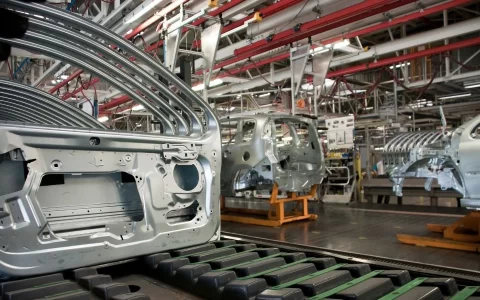
Carbon steel primarily uses carbon as its main alloying element, while alloy steel contains additional elements such as chromium, molybdenum, nickel, or manganese to improve specific mechanical or performance properties.
1018 carbon steel provides good machinability and is suitable for general-purpose CNC components. 1045 is a better choice when higher strength and hardness are required.
4140 is a popular choice for CNC machined components requiring a balance of strength, toughness, machinability, and heat-treatment capability. 4340 is suitable for applications requiring higher strength and toughness.
Carbon steel has limited natural corrosion resistance and can rust when exposed to moisture. Coatings, plating, painting, or other protective treatments can improve corrosion resistance.
Yes. CNC milling and turning can produce precision steel components with tight dimensional tolerances. The achievable tolerance depends on the steel grade, part geometry, machining process, tooling, and inspection requirements.
Kintec Machining provides precision carbon and alloy steel CNC machining services for prototypes, custom components, and low-volume production.From economical 1018 carbon steel to high-strength 4140 and 4340 alloy steel, we help engineers and sourcing teams select the right material, machining process, and surface treatment for their application.
Send your drawings for a free review and quick quote. Our engineers are here to help.
ISO certified | Fast delivery | Factory Direct