


Call us and get your quote!
10% Off Your First Custom Part
-Start Today!
Send your drawings for a free review and quick quote. Our engineers are here to help.
ISO certified | Fast delivery | Factory Direct

Tumbling finish is a mechanical surface finishing process that uses abrasive media and controlled movement to deburr, smooth, polish, and round edges on CNC machined parts. It removes sharp edges and minor surface imperfections while creating a more uniform surface finish with minimal dimensional impact.
Key benefits include:
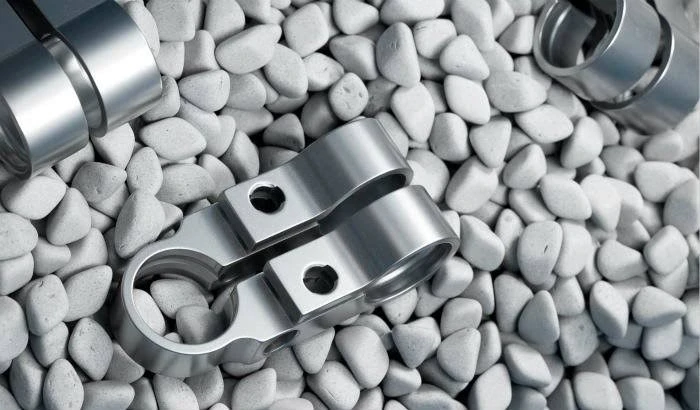
Tumbling finish is widely used for CNC machined components because it efficiently combines deburring, edge rounding, smoothing, and polishing in one finishing process. It is commonly used for aluminum, stainless steel, brass, steel, titanium, and other metal parts across aerospace, automotive, medical, electronics, and industrial applications.
Different tumbling methods use different equipment, abrasive media, and processing conditions to achieve specific deburring, smoothing, polishing, and edge-finishing results. The appropriate method depends on part geometry, material, production volume, dimensional requirements, and desired surface finish.
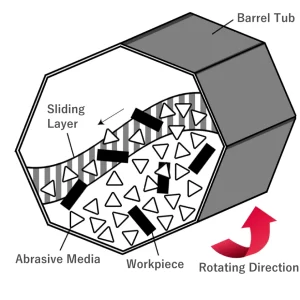
Rotary barrel tumbling places CNC parts and abrasive media inside a rotating barrel. The controlled movement produces contact between the parts and media to remove burrs, round edges, and improve surface consistency.
Optimization Guidelines:
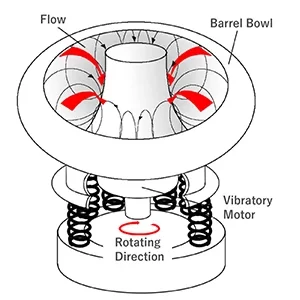
Vibratory tumbling uses controlled vibration to move parts and abrasive media together. It provides uniform deburring and surface finishing and is suitable for delicate components and complex geometries.
Optimization Guidelines:
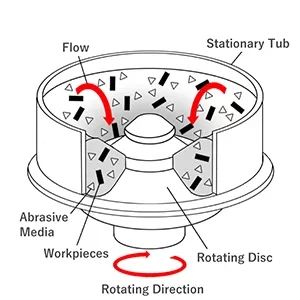
Centrifugal disc finishing uses high-speed rotational movement to accelerate contact between abrasive media and small components. It provides rapid deburring, edge rounding, and polishing for precision parts.
Optimization Guidelines:
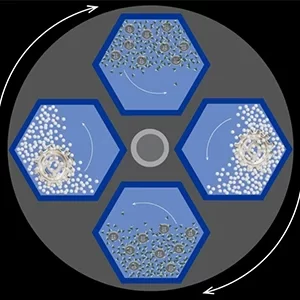
Centrifugal barrel finishing provides controlled high-speed finishing action for precision components requiring efficient deburring, polishing, and dimensional control.
Optimization Guidelines:
Tumbling provides controlled deburring, surface smoothing, polishing, and edge finishing for CNC machined parts. Different tumbling processes can improve part quality, appearance, and dimensional consistency according to material, geometry, and application requirements.
01
Tumbling effectively removes CNC machining burrs and sharp edges while creating consistent edge radii. It is especially suitable for small and complex components requiring reliable and repeatable deburring.
Medical instruments
Automotive fasteners
Electronics housings
02
Tumbling improves surface smoothness by reducing minor machining marks and surface irregularities. Proper media selection and process control help achieve a more uniform surface texture across production batches.
03
Tumbling can improve the visual appearance of CNC components by smoothing surfaces and creating a more consistent finish. Polishing media can be selected when a brighter and more refined surface is required.
04
Controlled tumbling minimizes unwanted material removal and helps maintain critical part dimensions. Appropriate media, processing time, and finishing parameters are important for precision components with tight tolerances.
Tumbling processes use controlled rotation, vibration, or centrifugal force to deburr, smooth, polish, and round edges on CNC machined parts. Different tumbling methods provide different processing speeds, finishing effects, dimensional control, and production capabilities.
| Tumbling Method | Key Parameters & Metrics | Advantages | Limitations |
|---|---|---|---|
| Rotary Barrel Tumbling | Speed: 20–40 RPM · Media: ceramic, plastic, steel · Processing time: 1–6 hrs | Economical for high-volume parts · Efficient deburring and edge rounding | Longer cycle times · Possible dimensional variation |
| Vibratory Tumbling | Frequency: 900–3000 cycles/min · Media: ceramic, plastic, porcelain | Shorter cycle times · Uniform surface finish · Minimal dimensional change | Higher equipment investment |
| Centrifugal Disc Finishing | RPM: 50–300 RPM · Aggressive finishing action | Rapid deburring and polishing · Efficient for small components | Limited to smaller parts · Risk of excessive material removal |
| Centrifugal Barrel Finishing | High-speed rotation: 100–250 RPM · Media: ceramic, plastic, porcelain | Precise dimensional control · Ideal for high-precision components | Complex machinery setup · Higher operational costs |
Tumbling finish can be combined with CNC machining, sheet metal fabrication, and rapid prototyping to provide complete manufacturing and post-processing solutions for precision components.
01 · CNC MACHINING
Tumbling is commonly applied to CNC milled and turned parts to remove burrs, smooth edges, reduce machining marks, and improve overall surface consistency.
Supported Processes
Precision machining
02 · SHEET METAL
Suitable sheet metal components can receive tumbling or related mechanical finishing processes to remove sharp edges and improve surface consistency before assembly or additional finishing.
Applications
Metal enclosures
Machine covers
Industrial panels
03 · RAPID PROTOTYPING
Tumbling improves prototype part quality by removing burrs and sharp edges, allowing engineers to evaluate the function, handling, and appearance of components before mass production.
Although tumbling is an efficient finishing process, incorrect media selection, excessive processing time, or unsuitable process parameters can cause inconsistent finishing, excessive material removal, or part damage.
• Incorrect media selection
• Uneven loading
• Incorrect processing time
• Select media according to material and finish requirements
• Maintain consistent part-to-media ratios
• Control the finishing cycle
Aggressive media, excessive vibration, or unsuitable processing conditions may cause scratches, deformation, or unwanted contact between components.
• Use appropriate finishing media
• Control vibration or rotation speed
• Separate delicate components when necessary
• Different part geometries
• Worn or contaminated media
• Inconsistent cycle times
• Group parts with compatible geometries
• Inspect and replace media regularly
• Standardize processing parameters
Extended processing or overly aggressive finishing can gradually remove material from edges and surfaces, potentially affecting precision dimensions.
• Control cycle time
• Select suitable media
• Protect critical tolerance areas
• Perform dimensional inspection after finishing
Need CNC machined parts with clean edges, reduced burrs, and a consistent surface finish? Kintec Machining combines precision CNC machining with professional tumbling and other surface finishing options for prototypes, custom components, and low-volume production.
Send your drawings for a free review and quick quote. Our engineers are here to help.
ISO certified | Fast delivery | Factory Direct