PEEK CNC Machining Explained: What Buyers Need to Know
PEEK gets specified because nothing else on the material chart checks every box at once — high heat resistance, chemical inertness, biocompatibility, and enough mechanical strength to replace metal in some structural roles. But PEEK CNC machining isn’t a drop-in swap for cutting aluminum or Delrin. The polymer’s toughness that makes it valuable in service is the same property that makes it demanding to cut cleanly, and a shop running generic plastic parameters on it will hand back parts with poor finish or dimensional drift. This guide explains what actually happens when PEEK goes on the machine, and what to check before sending a drawing.
What Is PEEK and Why It’s Machined Instead of Molded
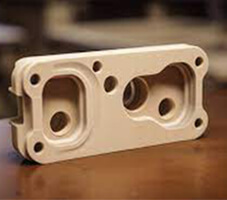
PEEK (polyether ether ketone) is a high-performance thermoplastic used where metal would be overkill on weight or cost, but standard plastics can’t survive the operating temperature, chemical exposure, or sterilization cycle. For low volumes and prototypes, CNC machining PEEK from solid stock skips the tooling investment that injection molding requires, and it holds tighter tolerance than most molded PEEK parts can achieve straight out of the mold.
PEEK CNC Machining vs Machining Other Engineering Plastics
| Factor | PEEK | Delrin (Acetal) | PTFE |
|---|---|---|---|
| Max continuous service temp | ~250°C | ~90°C | ~260°C |
| Machinability | Moderate — tough, heat-sensitive | Excellent — cuts cleanly | Difficult — soft, tends to deform |
| Chemical resistance | Excellent | Good | Outstanding |
| Relative material cost | High | Low | Moderate |
| Typical tolerance | ±0.025 mm | ±0.025 mm | ±0.05 mm |
PEEK Machining Tolerances, Grades & Lead Times
Not every PEEK is the same PEEK. Grade selection changes both machinability and whether the part is actually suitable for its intended application.
| PEEK Grade | Common Application | Typical Tolerance | Standard Lead Time |
|---|---|---|---|
| Unfilled (natural) PEEK | General precision components, insulators | ±0.025 mm | 4–6 days |
| Medical-grade PEEK | Surgical instruments, implant-adjacent parts | ±0.025 mm | 5–8 days |
| Carbon-fiber-filled PEEK | Structural, high-stiffness applications | ±0.025 mm | 5–7 days |
| Glass-filled PEEK | Dimensionally stable housings | ±0.025 mm | 5–7 days |
| Bearing-grade PEEK (PTFE-filled) | Low-friction bushings, seals | ±0.025 mm | 4–6 days |
Practical Applications by Industry
- Medical devices: surgical instrument handles and implant-adjacent components requiring biocompatibility and sterilization resistance.
- Semiconductor equipment: chamber components and wafer handling parts exposed to aggressive chemicals and thermal cycling.
- Aerospace components: lightweight structural parts replacing metal where weight savings matter more than absolute stiffness.
- Electronics & connectors: high-temperature insulators near components that generate significant heat in operation.
- Automotive & EV components: under-hood parts needing chemical and heat resistance beyond standard engineering plastics.
Why PEEK Is Harder to Cut Than It Looks
PEEK’s low thermal conductivity means heat from the cutting tool doesn’t dissipate quickly, and if it builds up, the material can soften locally, smear, or leave a poor surface finish rather than a clean cut. Sharp tooling and controlled feed rates matter more here than on softer plastics, and a shop that treats PEEK like any other polymer often ends up with tool marks or subtle dimensional inconsistency that only shows up under close inspection. Getting a clean edge on threads and small features also depends on tool geometry chosen specifically for PEEK, not repurposed from an aluminum program.
Machining PEEK on 5-Axis Equipment for Complex Geometry
Parts with curved surfaces or features accessible from multiple angles benefit from 5-axis machining, which completes complex PEEK geometry in fewer setups than repeated repositioning on a 3-axis mill. Fewer setups means less handling of a material that can be sensitive to clamping pressure, and it reduces the positioning error that compounds across multiple fixture changes. Kintec’s own 5-axis machining guide covers how this applies across materials, including engineering plastics like PEEK.
How to Specify a PEEK CNC Machining Order Correctly
State the exact PEEK grade and filler content, not just “PEEK” — unfilled, carbon-filled, and glass-filled grades machine differently and perform differently in service. Confirm whether the shop’s CNC milling and CNC turning processes are tuned specifically for high-performance plastics, and check quality certifications such as ISO 9001 before sending a medical or aerospace drawing. Reviewing case studies involving similar materials is a fast way to confirm real experience rather than a materials list on a website.
FAQ: PEEK CNC Machining
What tolerance can be held on machined PEEK parts?
Most PEEK components hold ±0.025 mm with proper process control; tighter features are achievable but should be flagged individually rather than applied across the whole part.
Is PEEK harder to machine than metal?
Not harder in the strength sense, but more demanding in process control — its low thermal conductivity means heat management during cutting matters more than with most metals or softer plastics.
Can PEEK CNC machining replace injection molding for low volumes?
Yes. For prototypes and low-volume runs, machining PEEK from stock avoids mold tooling cost entirely and often holds tighter tolerance than an as-molded part.
What PEEK grade is best for medical applications?
Medical-grade PEEK, formulated and documented for biocompatibility, should be specified explicitly — standard industrial PEEK is not an equivalent substitute for regulated applications.
Get Your PEEK CNC Machining Quote
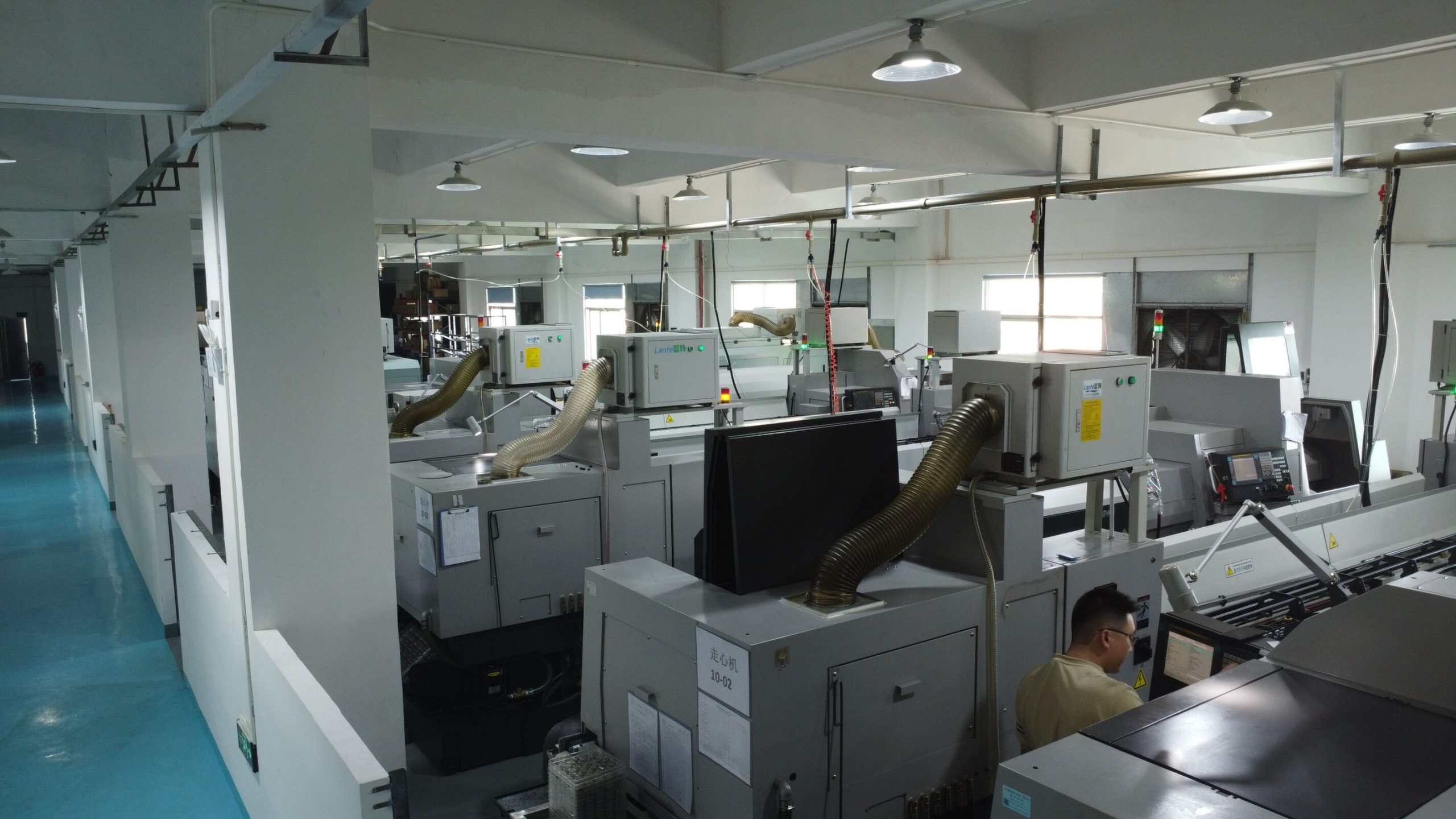
Kintec machines PEEK and other high-performance plastics using process parameters tuned specifically for the material, backed by 5-axis and Swiss capability for complex geometry.
- ✅ Unfilled, medical-grade, carbon- & glass-filled PEEK machined in-house
- ✅ No minimum order — prototype from 1 piece
- ✅ Mixed-material assemblies with matched metal components
- ✅ ISO 9001:2015 certified facility
- ✅ 24-hour quote turnaround
👉 Send your drawing now and get a free PEEK CNC machining quote in 24 hours.