Engineering Plastic Machining: A Buyer’s Guide to Precision Plastic Parts
Engineering plastic machining gets treated as an afterthought on a lot of drawings — swap the material callout from aluminum to PEEK and assume the rest of the process carries over unchanged. It doesn’t. Plastics move, flex, and heat up differently under a cutting tool than metal does, and a shop that doesn’t adjust for that ends up handing back a part that’s out of tolerance the moment it cools to room temperature. This guide covers what actually changes when a part is cut from engineering plastic instead of metal, and how to specify it so the part you get matches the part you drew.
Why Engineering Plastic Machining Isn’t Just “Metal Machining, Softer Material”
Plastics have low thermal conductivity, so heat generated by cutting doesn’t dissipate the way it does in aluminum or steel — it stays concentrated at the tool tip and can distort the part before it’s even off the machine. Many engineering plastics also have higher thermal expansion than metal, meaning a part machined to spec at cutting temperature can shrink measurably once it returns to room temperature. A shop experienced in engineering plastics accounts for this with slower feeds, sharper tooling, and tolerance allowances built around the specific polymer, not a generic metal cutting program.
Engineering Plastic Machining vs Metal Machining vs Injection Molding
| Factor | Engineering Plastic Machining | Metal CNC Machining | Injection Molding |
|---|---|---|---|
| Tooling required | None | None | Hard tooling required |
| Typical tolerance | ±0.025–0.05 mm | ±0.005–0.013 mm | ±0.1–0.2 mm |
| Thermal stability during machining | Lower — needs process control | High | N/A — molded, not cut |
| Minimum order | 1 piece | 1 piece | Thousands (tooling cost) |
| Best fit | Prototypes, low volume, functional plastic parts | Structural, load-bearing parts | High-volume plastic production |
Engineering Plastic Materials, Tolerances & Lead Times
Not all engineering plastics behave the same way under a cutting tool, and picking the wrong grade for the application costs more in rework than the material itself ever saves.
| Material | Common Application | Typical Tolerance | Standard Lead Time |
|---|---|---|---|
| PEEK | Medical instruments, semiconductor components | ±0.025 mm | 4–7 days |
| Delrin (Acetal/POM) | Gears, bushings, low-friction parts | ±0.025 mm | 3–5 days |
| PTFE | Seals, insulators, chemical-resistant parts | ±0.05 mm | 3–5 days |
| Nylon (PA6) | Structural brackets, wear components | ±0.05 mm | 3–5 days |
| Polycarbonate (PC) | Optical housings, impact-resistant covers | ±0.05 mm | 3–5 days |
Practical Examples by Industry
- Medical device components: PEEK surgical instrument handles and implantable-adjacent parts requiring biocompatibility and tight bore tolerance.
- Electronics insulators: Delrin and PTFE components isolating conductive elements in connector and sensor assemblies.
- Semiconductor equipment parts: PEEK and PTFE components resistant to chemical exposure and thermal cycling in process chambers.
- Robotics & automation components: Delrin gears and bushings machined for low-friction, self-lubricating motion.
- Aerospace & defense components: lightweight PEEK and PC parts machined where metal would add unnecessary weight.
Design Considerations for Machined Plastic Parts
Wall thickness matters more on plastic parts than metal ones — thin sections can warp during machining as internal stress releases, especially on parts cut from extruded or cast stock rather than compression-molded blanks. Sharp internal corners concentrate stress in plastic more than in metal, so a slightly larger radius isn’t just cheaper to machine, it reduces the risk of cracking under load. Holes and threads also need clearance adjustments specific to each polymer’s expansion behavior, particularly for parts that will see temperature swings in service.
How to Specify Engineering Plastic Machining Correctly
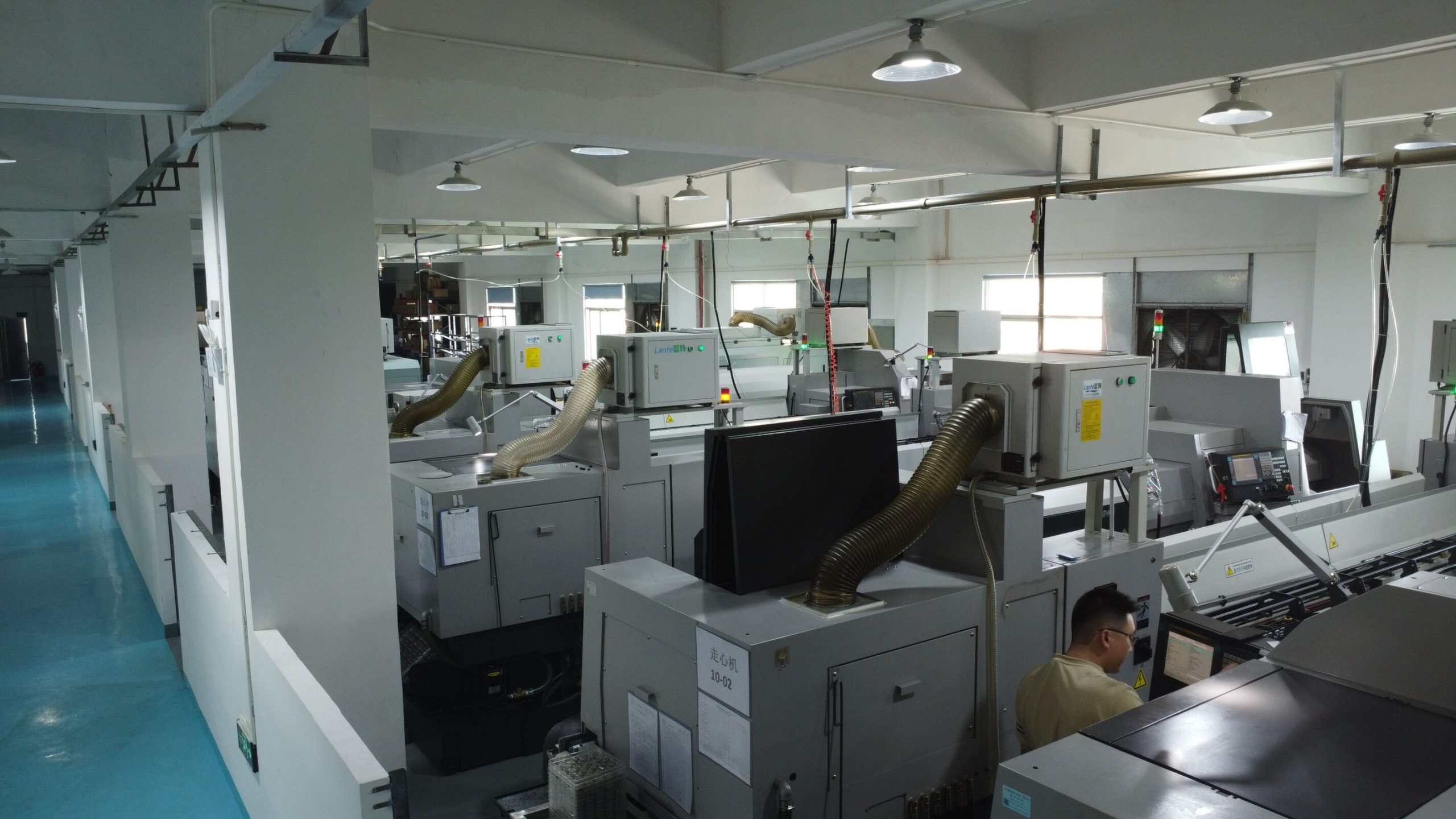
Call out the exact polymer grade, not just the family — medical-grade PEEK and standard PEEK machine and perform differently, and substituting one for the other without disclosure can create a compliance problem later. Confirm whether the shop runs CNC milling and CNC turning programs specifically tuned for plastics rather than reusing metal parameters, and check quality certifications such as ISO 9001 before sending a critical drawing. A shop offering both engineering plastic machining and metal machining under one roof also simplifies mixed-material assemblies where a plastic insulator mates directly with a machined metal housing.
FAQ: Engineering Plastic Machining
Which engineering plastics are easiest to CNC machine?
Delrin (acetal) and nylon machine cleanly with predictable tolerance; PTFE and PEEK require more process control due to their thermal and mechanical properties.
What tolerance can be held on machined plastic parts?
Most engineering plastics hold ±0.025–0.05 mm depending on part geometry and material; PEEK and Delrin can reach the tighter end of that range with proper process control.
Why does a plastic part sometimes shrink after machining?
Heat from cutting and residual internal stress in the stock material can cause dimensional change as the part cools — accounting for this during programming keeps the final part within spec.
Can engineering plastic parts be machined in low volumes?
Yes. CNC machining requires no tooling, so a single prototype or a short production run can be quoted the same way, without a minimum order.
Get Your Engineering Plastic Machining Quote
Kintec machines PEEK, Delrin, PTFE, nylon, and polycarbonate using process parameters tuned specifically for plastics — not repurposed metal programs.
- ✅ PEEK, Delrin, PTFE, nylon & PC machined in-house
- ✅ No minimum order — prototype from 1 piece
- ✅ Mixed-material assemblies with matched metal components
- ✅ ISO 9001:2015 certified facility
- ✅ 24-hour quote turnaround
👉 Send your drawing now and get a free engineering plastic machining quote in 24 hours.