CNC milled prototypes and production parts are two stages of the same manufacturing question: can this design be made reliably, and can it scale? When a design moves from CAD file to physical part, the machining partner you choose decides how fast you can iterate and how reliable the production run turns out. Kintec Machining builds CNC milled prototypes and full production batches on the same equipment, so tolerances and material behavior don’t shift between phases. This guide covers what CNC milling delivers at each stage, how prototypes differ from production parts, and what to ask a supplier before sending a drawing.

What Are CNC Milled Prototypes, and Why They Matter
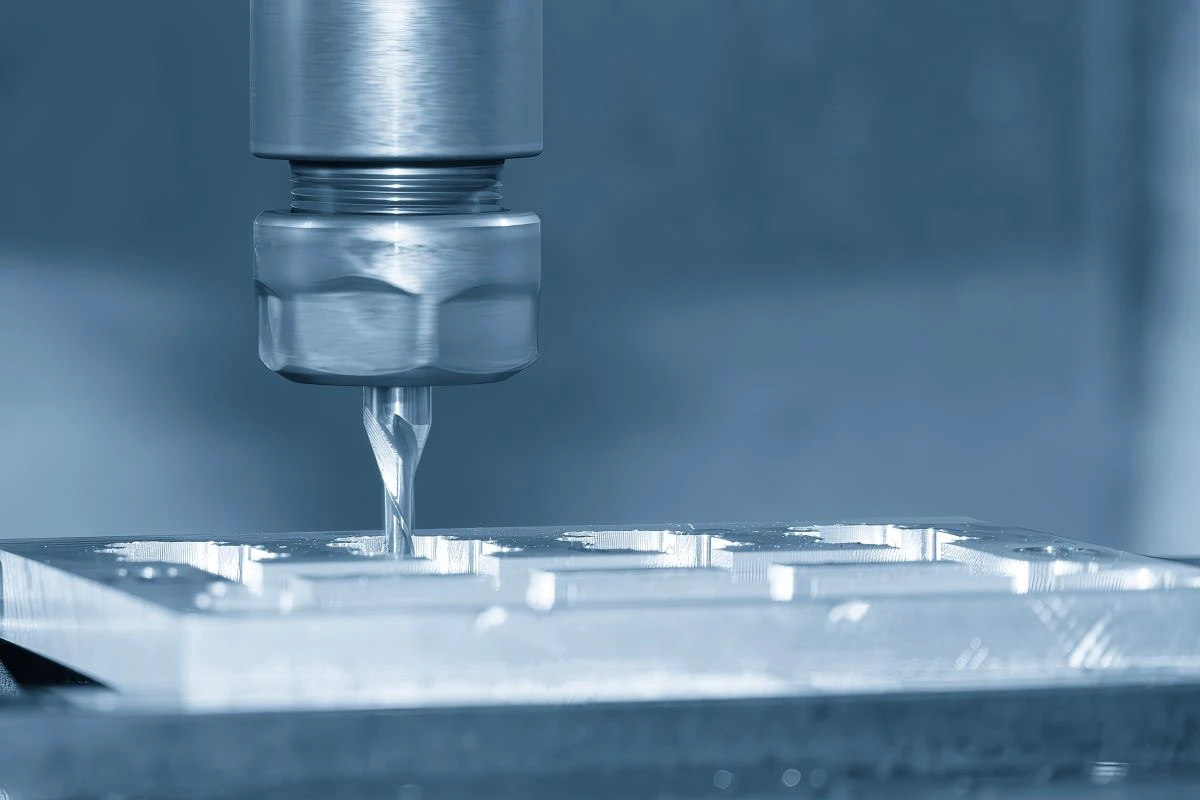
A CNC milled prototype is cut directly from a solid block of metal or plastic on a 3-axis, 4-axis, or 5-axis milling center. Unlike a 3D printed model, a milled prototype uses the same aluminum, stainless steel, or engineering plastic the final part will ship in, so mechanical testing results actually mean something. Teams building robotics housings, medical instrument components, or automotive brackets use CNC milled prototypes to check fit against mating parts and validate a design before committing to tooling or a production order. See Kintec’s CNC milling services for equipment and tolerance details.
From First Article to Functional Testing
A single CNC milled prototype, often called a first article, lets an engineering team confirm dimensions, surface finish, and thread engagement before a design moves further down the line. Most CNC machining shops turn a first article around in three to seven days. Because Kintec machines prototypes and production runs on the same 3, 4, and 5-axis centers, a part that passes first-article inspection carries straight into volume manufacturing without a separate re-validation cycle.
CNC Milling Services: Prototypes vs Production Parts
| Factor | CNC Milled Prototypes | CNC Production Parts |
|---|---|---|
| Typical quantity | 1–20 pieces | 50–10,000+ pieces |
| Lead time | 3–7 days | 1–4 weeks, depending on volume |
| Primary goal | Fit, form, and function validation | Repeatable quality at cost |
| Tolerance focus | Confirm critical dimensions | Hold tolerance across every unit |
| Documentation | Basic inspection report | Material certs, CMM/FAI reports |
| Cost per part | Higher (setup-driven) | Lower (volume-driven) |
Practical Examples by Industry
- Aerospace: 5-axis milled aluminum brackets and mounts requiring ±0.001″ tolerance on mating faces and full material traceability.
- Medical: Swiss-turned stainless steel instrument shafts and 5-axis milled surgical guide components in biocompatible materials.
- Automotive & EV: low-volume CNC milled aluminum housings for battery enclosures, produced ahead of tooling investment.
- Robotics: CNC milled joint housings and gear mounts in 6061 and 7075 aluminum for weight-critical assemblies.
- Electronics: brass and aluminum connector housings and heat sinks machined to tight flatness for reliable thermal contact.
Machining Capabilities Behind Every CNC Milled Part
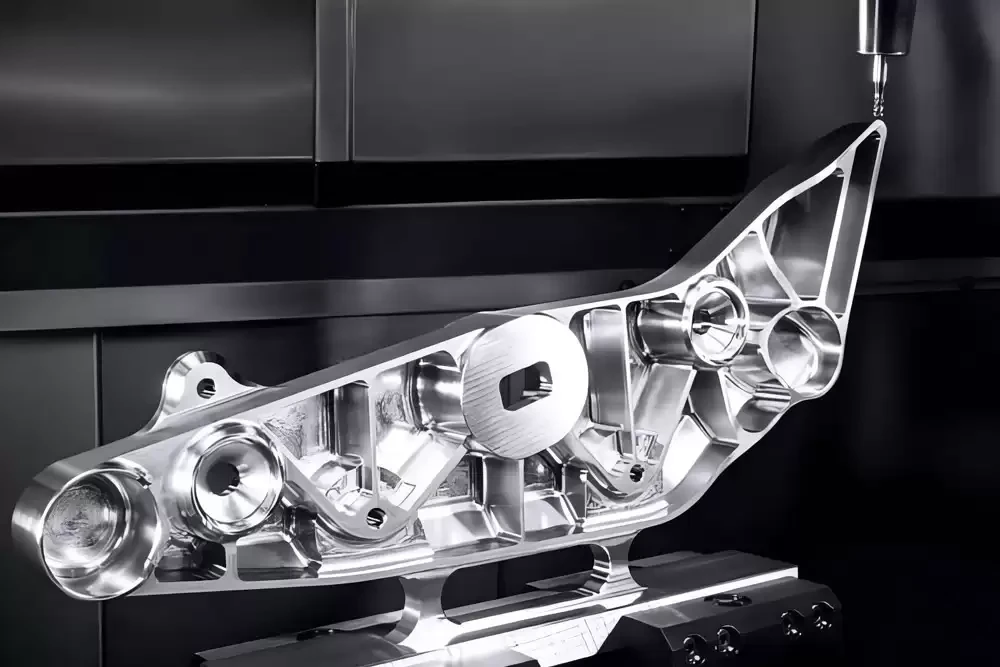
5-axis CNC machining centers cut a part from multiple angles in a single setup, which matters for impeller blades, undercuts, and angled mounting faces common in aerospace and robotics components. Because the part isn’t repositioned mid-job, tolerance stack-up drops and cycle times shorten on complex geometry that would otherwise need several fixtures. Swiss-type lathes handle long, slender parts under roughly 1.25 inches in diameter, holding tight tolerances on connector pins, instrument shafts, and small housings that would deflect on a standard lathe. Kintec runs CNC turning and Swiss machining alongside milling, so multi-process parts don’t need to move between vendors.
Materials and Tolerance Standards for CNC Machined Parts
| Material Family | Common Alloys | Typical Tolerance | Best Suited For |
|---|---|---|---|
| Aluminum | 6061, 7075, 5052 | ±0.001″ (±0.025 mm) | Robotics, automotive, enclosures |
| Stainless steel | 303, 304, 316, 17-4PH | ±0.001″ (±0.025 mm) | Medical, aerospace fasteners |
| Brass & copper | C360, C260, C101 | ±0.0015″ (±0.038 mm) | Electronics, connectors |
| Engineering plastics | Delrin, PEEK, Nylon | ±0.002″ (±0.05 mm) | Prototyping, low-load parts |
Aluminum, stainless steel, and brass cover most prototype and production applications. Without an attached drawing, parts are typically produced to ISO 2768 medium class. With a drawing calling out critical features, tolerances as tight as ±0.001 in (±0.025 mm) are achievable, with select features down to ±0.0002 in.
Choosing a CNC Machining Manufacturer for Prototyping and Production
Before sending a PO, confirm a few things: does the shop run prototypes and production on the same equipment and process sheet, what tolerance is quoted without a drawing, which certifications apply to your industry, and how design-for-manufacturability feedback is communicated. Kintec operates over 100 CNC machines across an 8,000 m² facility in Dongguan, China, supports material certificates and inspection reports, and assigns a project engineer who reviews files before quoting and manages the job from first article through volume production. Read more about our company background, quality certifications, and industry solutions.
FAQ: CNC Milled Prototypes and Production Parts
What’s the difference between a CNC milled prototype and a 3D printed prototype?
A CNC milled prototype is cut from production-grade metal or plastic, so it matches the strength, finish, and tolerance of the final part. A 3D printed prototype is faster for early form checks but doesn’t represent true machined mechanical properties.
How many CNC milled prototypes should I order before production?
Most teams order one to five first-article parts to validate fit and function, then move to a low-volume production run of 50 to 500 pieces before committing to full-scale manufacturing.
What tolerance can CNC milling hold without a drawing?
Without a drawing, parts are typically machined to ISO 2768 medium class. With a drawing calling out critical features, tolerances as tight as ±0.001 in (±0.025 mm) are achievable.
Can one supplier handle both prototyping and production volume?
Yes. A shop running 3, 4, and 5-axis milling, CNC turning, and Swiss machining under one roof can carry a part from first article to production runs of 1,000+ pieces without re-qualifying tooling.
What materials work best for CNC milled prototypes and production parts?
Aluminum (6061, 7075), stainless steel (303, 304, 316), brass, and engineering plastics cover most prototype and production applications across aerospace, medical, automotive, robotics, and electronics parts.
CNC Milled Prototypes and Production Parts: Get a Quote
Kintec machines aluminum, stainless, and brass prototypes and production parts in-house for aerospace, medical, automotive, robotics, and electronics buyers.
- ✅ Free DFM review on every quote request
- ✅ Aluminum, stainless, brass & plastic machining in-house
- ✅ No minimum order — prototype from 1 piece
- ✅ ISO 9001:2015 certified facility
- ✅ 24-hour quote turnaround
👉 Send your drawing now and get a free CNC milled prototype or production quote in 24 hours.