Materials for Heat Sinks: A CNC Machining Buyer’s Guide
Choosing the right heat sink material is a thermal decision before it’s a machining decision. Copper conducts heat better than aluminum, but weighs three times as much and costs more to machine. For engineers speccing a heat sink for a power electronics enclosure, EV battery module, or LED array, the material call determines cooling performance, weight budget, and per-unit cost all at once. This guide compares the materials CNC shops actually cut heat sinks from, with the tolerances and lead times to expect.
Why Material Choice Drives Heat Sink Performance
A heat sink moves heat away from a component by conduction, then sheds it to air or coolant through surface area. Material thermal conductivity sets the ceiling on how efficiently that heat moves through the part, but machinability, weight, and cost decide whether that ceiling is practical to hit for a given application.
Aluminum vs Copper vs Alloy Heat Sink Materials
| Factor | Aluminum 6061 | Copper C110 | Aluminum 7075 |
|---|---|---|---|
| Thermal conductivity | ~167 W/m·K | ~390 W/m·K | ~130 W/m·K |
| Relative weight | Baseline | ~3.3x heavier | ~1.02x aluminum 6061 |
| Machinability | Excellent | Moderate — gummier cut | Good |
| Relative material cost | Low | High | Moderate |
| Best fit | General electronics, LED, EV | High-density power electronics | Weight-critical, higher strength |
Heat Sink Materials, Tolerances & Lead Times
Fin thickness and pitch tolerance affect airflow and cooling performance, so heat sink drawings should specify tolerance on fin geometry, not just overall envelope dimensions.
| Material | Common Heat Sink Use Case | Typical Tolerance | Standard Lead Time |
|---|---|---|---|
| Aluminum 6061 | Enclosure heat sinks, LED fixtures | ±0.05 mm (fin), ±0.013 mm (mount) | 3–5 days |
| Aluminum 6063 | Extruded-profile finished heat sinks | ±0.05 mm | 3–5 days |
| Copper C110 / C101 | High-density power module heat sinks | ±0.05 mm | 5–8 days |
| Aluminum 7075 | Weight-critical aerospace/robotics heat sinks | ±0.013 mm | 4–7 days |
| Copper-aluminum hybrid | Vapor chamber base plates | ±0.05 mm | 6–9 days |
Heat Sink Machining Applications by Industry
- EV & automotive heat sinks: aluminum cold plates and battery module heat spreaders machined to tight flatness tolerance for thermal interface contact.
- Power electronics heat sinks: copper base plates paired with aluminum fin arrays for IGBT and power module cooling.
- Robotics & automation heat sinks: compact aluminum 7075 heat sinks for motor drivers and servo controllers where weight matters.
- LED lighting heat sinks: CNC-milled aluminum 6063 fin arrays for fixture housings needing consistent thermal and cosmetic finish.
- Aerospace & defense heat sinks: lightweight aluminum and copper-aluminum hybrid heat sinks for avionics cooling.
How to Specify a CNC Machined Heat Sink
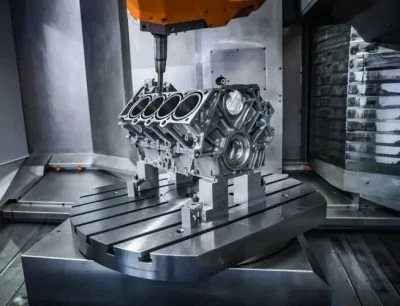
Call out thermal interface flatness separately from general profile tolerance, and confirm whether fins are milled, skived, or bonded — each affects both thermal performance and cost. A shop offering both CNC milling and 5-axis machining can hold tight fin geometry on complex heat sink shapes that simple 3-axis milling can’t reach. Confirm quality certifications such as ISO 9001 before sending a thermal-critical drawing.
FAQ: Materials for Heat Sinks
Which material is better for heat sinks, aluminum or copper?
Copper conducts heat better, but aluminum is lighter, cheaper, and easier to machine — most heat sinks use aluminum unless thermal density specifically requires copper.
What tolerance is needed for a CNC machined heat sink?
Mounting surfaces and thermal interface areas typically need ±0.013–0.025 mm flatness, while fin dimensions are commonly held to ±0.05 mm.
Can heat sink fins be CNC machined instead of extruded?
Yes — CNC milling produces custom fin geometry and variable fin density that standard extrusion profiles can’t match, useful for tight enclosure spaces.
How fast can a prototype heat sink be machined?
Simple aluminum heat sinks typically ship in 3–5 days; copper or hybrid designs with tighter thermal tolerances take 5–9 days.
Get Your Heat Sink Machining Quote
Kintec machines aluminum and copper heat sinks using CNC milling, turning, and 5-axis capability for complex fin geometry.
- Aluminum, copper & hybrid heat sink materials machined in-house
- No minimum order — prototype from 1 piece
- Tight flatness tolerance on thermal interface surfaces
- Material certs and inspection reports on request
- ISO 9001:2015 certified facility
- 24-hour quote turnaround
👉 Send your heat sink drawing now and get a free CNC machining quote in 24 hours.