The decision between rapid prototyping vs mass production isn’t just about quantity — it’s about where your design is in its lifecycle and what risk you’re managing. Committing to tooling before the design is locked is expensive. Staying in prototyping mode after it’s stable is a different kind of expensive. This guide walks engineers and sourcing managers through the key differences, cost drivers, materials, tolerances, and decision points.
Rapid Prototyping vs Mass Production: The Core Difference
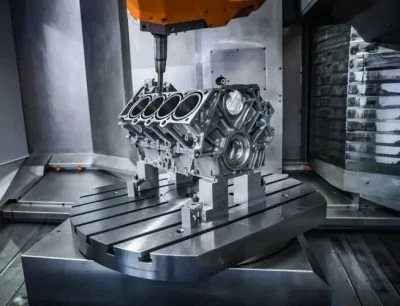
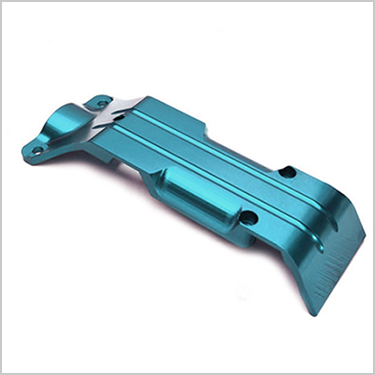
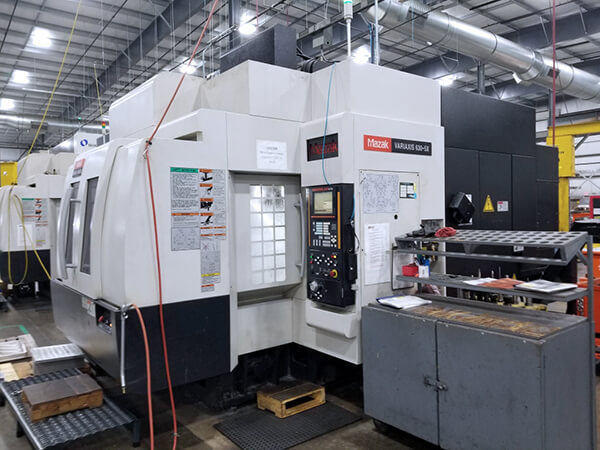
Rapid prototyping produces small quantities of a part — often one to twenty pieces — fast, without hard tooling, so engineers can test, validate, and iterate. Mass production amortizes setup and tooling cost across thousands of identical units. The trade-off is flexibility vs cost-per-piece. In CNC machining, the same machine can do both, which makes it uniquely suited to bridging the gap between phases.
When to Choose Rapid Prototyping Over Mass Production
Choose rapid prototyping when:
- The design is not yet finalized — any dimension could change
- You need functional parts in production-grade material, not just shape verification
- The program is in concept, development, or validation phase
- Your quantity is under 50 pieces and no MOQ agreement is in place
- You need to test fit, function, and assembly before committing to tooling
CNC rapid prototyping delivers production-grade material properties from the first piece — which 3D printing often can’t — critical for structural tests and regulatory submissions.
Rapid Prototyping vs Mass Production: Side-by-Side Comparison
| Factor | Rapid Prototyping | Mass Production |
|---|---|---|
| Typical quantity | 1–50 pcs | 500+ pcs |
| Lead time | 3–10 days | 4–12 weeks (incl. tooling) |
| Per-part cost | Higher | Lower |
| Design flexibility | Full — change at any time | Low — tooling is fixed |
| Tooling investment | None (CNC) | Required for casting/molding |
| Material options | Wide — any machinable material | Depends on process |
| First-piece lead time | Days | Weeks to months |
Low-Volume Production: The Bridge Between Prototyping and Mass Production
Low-volume production — typically 50 to 500 pieces — is the phase most buyers underestimate. It’s past prototyping (the design is largely locked) but not yet at the scale where injection molding or casting justifies the tooling spend. CNC machining is ideal here: tolerances are fully repeatable, material traceability is straightforward, and quantities scale without re-qualifying a new process.
Materials and Tolerances Across Both Phases
Both phases use the same material range — aluminum, stainless, titanium, brass, and engineering plastics — and the same tolerances: ±0.13 mm general, ±0.013 mm precision, ±0.005 mm high-precision. A CNC prototype is a production part in a smaller quantity — the spec doesn’t change.
Where Rapid Prototyping and Production Parts Are Used
The same CNC machined parts appear across both phases in every industry: aerospace, medical, automotive, robotics, and electronics. Our case studies show programs from single prototype to production — same machines, same quality system.
How to Choose Between Rapid Prototyping and Mass Production
A simple decision framework:
| Your Situation | Right Path |
|---|---|
| Design still changing, need parts fast | Rapid prototyping |
| Design locked, quantity under 500, no tooling budget | Low-volume CNC production |
| Design proven, quantity 1,000+, margins require it | Mass production (casting/molding) |
| Need to ship before tooling is ready | Bridge production via CNC |
FAQ: Rapid Prototyping vs Mass Production
What is the difference between rapid prototyping and mass production?
Rapid prototyping makes small quantities fast without tooling, to test and iterate. Mass production amortizes tooling cost across thousands of identical units for the lowest per-part price.
Can CNC machining handle both prototyping and production?
Yes. CNC machining is one of the few processes that runs economically from one piece to thousands. The material, tolerances, and documentation are identical across both phases, which makes it the preferred bridge between concept and volume production.
Stuck Between Prototype and Production With No Clear Path Forward?
Kintec Machining is built for exactly this gap. Same machines, same quality system, same documentation — from your first prototype through bridge and low-volume production.
- No MOQ — one piece or five hundred, same workflow
- Rapid prototyping in 3–7 days, low-volume production in 2–4 weeks
- Same material, tolerance, and documentation from prototype to production
- Free DFM review — we flag what changes between phases before you commit
- Milling, turning, 5-axis & Swiss in one shop
👉 Send us your drawing and get a free quote — prototype or production quantity, 24 hours.