Automotive CNC machining spans everything from prototype engine brackets to high-volume EV battery housings. The shift to electrification has expanded the role of precision machined parts — more aluminum, more thermal management components, more tight-tolerance motor assemblies. For sourcing managers and engineers, the challenge is finding one supplier who covers prototyping and production without a mid-program switch. This guide covers materials, tolerances, lead times, and supplier checks.
What Is Automotive CNC Machining?
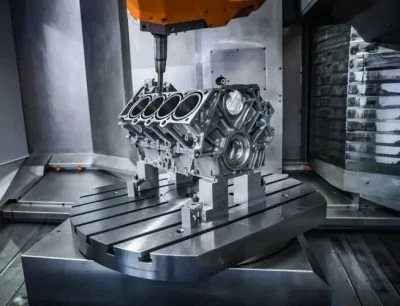
Automotive CNC machining is the production of custom metal and plastic parts for vehicles, powertrains, and EV systems on computer-controlled mills and lathes. It covers both traditional ICE components — engine brackets, transmission housings, valve bodies — and the growing EV parts portfolio: battery enclosures, motor mounts, heat spreaders, and inverter housings. A capable CNC supplier needs to scale with the program across all phases.
Best Materials for Automotive CNC Machining
| Material | Why Used in Automotive | Typical Automotive Parts |
|---|---|---|
| Aluminum 6061 / 7075 | Light, strong, good thermal conductivity | Battery housings, motor brackets, structural parts |
| Aluminum 6063 | Excellent thermal conductivity, extrudable | Heat sinks, cooling plates, EV thermal mgmt |
| Stainless 304 / 316 | Corrosion resistant for exhaust and fluid systems | Exhaust fittings, fluid connectors, fasteners |
| Alloy steel 4140 / 4340 | High strength, heat-treatable | Drive shafts, gears, suspension components |
| Titanium Ti-6Al-4V | Light, high strength for performance use | Motorsport brackets, exhaust, suspension |
| PEEK / POM | Light, low friction, chemical resistant | Bushings, seals, insulators, EV connectors |
Aluminum 6061 handles structure; 6063 handles thermal management where conductivity matters more than strength.
Tolerances for Automotive CNC Machining Parts
Automotive tolerances vary widely by application. A structural bracket runs at general tolerance; a transmission shaft bore needs precision. Specify tight tolerances only on mating, sealing, or locating features.
| Tolerance Level | Typical Range | Automotive Application |
|---|---|---|
| General | ±0.13 mm | Non-critical brackets, covers |
| Tight | ±0.025 mm | Mating flanges, bolt patterns |
| Precision | ±0.013 mm | Bearing bores, seal grooves |
| High-precision | ±0.005 mm | Performance powertrain, motorsport |
Lead Times in Automotive CNC Machining Programs
Automotive programs move through concept, prototype, validation, and production — a supplier who stays across all four saves months of re-qualification. Expect simple automotive prototypes in 3–7 days, complex 5-axis parts in 1–2 weeks, and low-volume production in 2–4 weeks. Rush prototype support during validation phases is common — confirm expedite capability at the quote stage.
Automotive CNC Machining Applications: ICE and EV
- EV battery systems: battery trays, enclosures, bus bar brackets (aluminum 6061)
- Motor & drivetrain: motor housings, inverter brackets, gearbox components
- Thermal management: cooling plates, heat sinks, fluid manifolds (aluminum 6063)
- Suspension & chassis: control arm brackets, uprights, anti-roll bar links (4140 steel, titanium)
- ICE components: cylinder head covers, throttle bodies, valve bodies (aluminum, stainless)
How to Source Automotive CNC Machining
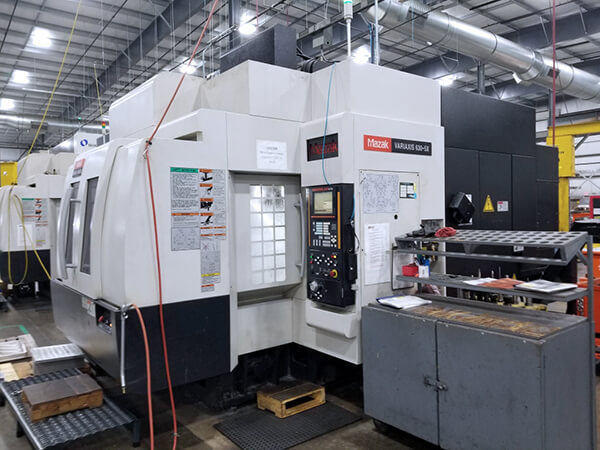
Verify the supplier owns the machines, holds current ISO 9001:2015, and can produce CMM reports and mill certs on request. Check the equipment list — a shop without 5-axis capability can’t support complex EV powertrain work. Ask whether the shop supports prototype through production, or only one phase. Our case studies show real automotive capability.
FAQ: Automotive CNC Machining
What materials are most common in automotive machining?
Aluminum 6061 and 6063 dominate EV and modern ICE programs for their strength-to-weight ratio and thermal properties. Alloy steels 4140 and 4340 cover loaded shafts and suspension. Titanium appears in motorsport and performance applications.
What tolerances does automotive machining typically hold?
General brackets run ±0.13 mm. Bearing bores and seal grooves need ±0.013 mm. Performance powertrain and motorsport features can require ±0.005 mm with proper 5-axis equipment and CMM inspection.
Can one supplier handle prototype and production for automotive?
Yes — and it’s worth finding one that can. Re-qualifying a new production supplier after the prototype phase adds weeks to the program. A shop with prototype-to-production capability eliminates that re-qualification delay.
Tired of Automotive Suppliers Who Drop Off After the Prototype?
Kintec Machining supports automotive programs from first prototype through low-volume and bridge production — on the same machines, same team, same quality system.
- Aluminum, steel, titanium, and engineering plastics in one shop
- CMM inspection and traceable material certs on every order
- 5-axis and milling capability for complex EV powertrain parts
- Honest 24-hour quotes
👉 Send us your automotive drawing and get a free factory-direct quote in 24 hours.