


Call us and get your quote!
10% Off Your First Custom Part
-Start Today!
Send your drawings for a free review and quick quote. Our engineers are here to help.
ISO certified | Fast delivery | Factory Direct

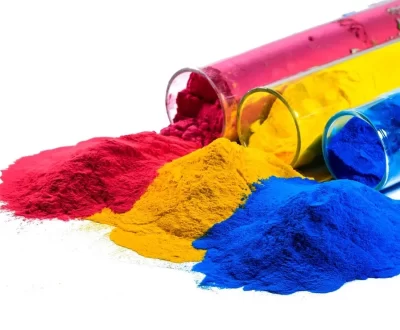
Powder coating is a durable surface finishing process that applies a dry powder to CNC machined metal parts using electrostatic spraying, followed by heat curing. The cured coating creates a uniform protective layer that improves corrosion resistance, wear resistance, surface appearance, and long-term durability.
Key benefits include:
• Provides excellent corrosion and chemical resistance
• Creates a durable, uniform protective coating
• Offers a wide range of colors and surface textures
• Improves resistance to scratches, impact, and wear
• Suitable for aluminum, steel, stainless steel, and other metal parts
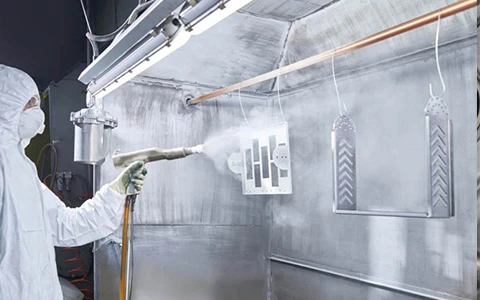
Powder coating is widely used for CNC machined components because it combines durable surface protection with customizable colors and textures. It is commonly applied to aerospace, automotive, electronics, industrial equipment, and consumer products requiring consistent appearance and long-term surface performance.
Different powder coating formulations provide different levels of durability, chemical resistance, weather resistance, and surface appearance. The appropriate coating depends on the material, operating environment, required finish, and application requirements.
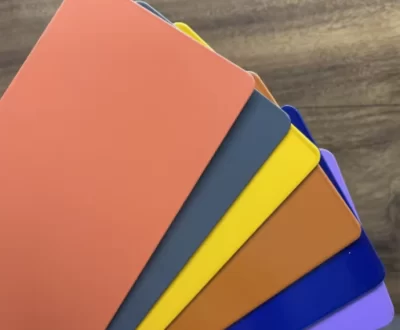
Epoxy powder coating provides strong adhesion, corrosion resistance, and chemical resistance. It is commonly selected for indoor CNC components and industrial parts where UV exposure is limited.
Applications
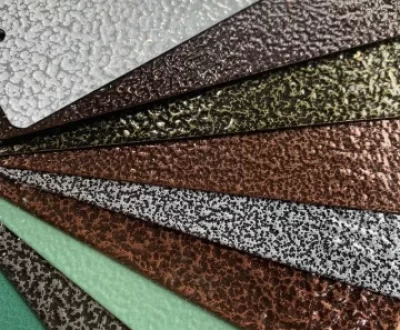
Polyester powder coating provides good weathering and UV resistance while offering a wide range of colors and surface textures. It is suitable for both functional and decorative metal components.
Applications
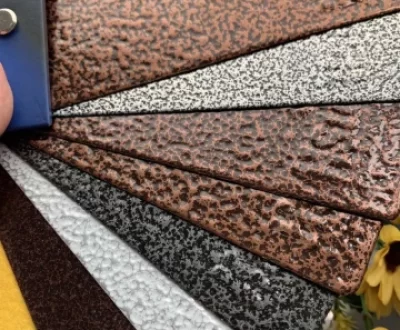
Epoxy-polyester hybrid powder coating combines the adhesion and corrosion resistance of epoxy with improved appearance and processing characteristics. It is commonly used for general-purpose indoor applications.
Applications
Super durable powder coatings are formulated for enhanced UV and weather resistance. They are suitable for CNC components exposed to outdoor environments and demanding operating conditions.
Applications
Powder coating is a dry finishing material made from four main components: resins and hardeners, additives, pigments, and fillers. Each component has a specific function that affects coating adhesion, durability, color, surface appearance, corrosion resistance, and overall performance.
01
Resins and hardeners form the foundation of powder coating. They determine important coating properties such as mechanical strength, chemical resistance, corrosion resistance, flexibility, and exterior durability. Common resin systems include polyester, epoxy, polyurethane, hybrid, and acrylic formulations.
02
Additives modify specific powder coating properties and improve application and finishing performance. Depending on the formulation, additives can control flow, degassing, gloss, UV resistance, corrosion protection, electrostatic charging, and special surface effects.
03
Pigments provide powder coatings with their color, hiding power, and visual appearance. Organic and inorganic pigments can be selected according to the required color, gloss level, curing temperature, UV exposure, and environmental conditions.
04
Fillers add volume to powder coating formulations and help control particle packing and formulation properties. Mineral fillers such as calcium carbonate can be used to achieve the required coating composition and performance.
Powder coating is primarily applied to conductive metal materials that can withstand the curing process. The coating system should be selected according to the material, operating temperature, required durability, and final application.
| Material | Powder Coating Result | Common Applications |
|---|---|---|
| Aluminum | Durable colored or textured protective coating | Aerospace, electronics |
| Stainless Steel | Uniform protective and decorative finish | Medical, industrial |
| Carbon Steel | Strong corrosion-resistant coating | Automotive, machinery |
| Alloy Steel | Durable surface protection | Industrial components |
| Cast Iron | Thick protective coating | Machinery, equipment |
Powder coating creates a protective barrier that helps shield metal CNC parts from moisture, oxidation, and environmental exposure.
The cured coating provides good resistance to scratches, impact, abrasion, and everyday wear.
Powder coating is available in many colors, gloss levels, and textures, making it suitable for both functional and decorative components.
Controlled powder application and curing can produce a uniform finish across batches of CNC machined parts.
Powder coating can achieve high material utilization because overspray can potentially be collected and reused depending on the coating system and process.
Powder coating provides durable surface protection, consistent appearance, and flexible color options, but its application requires suitable curing conditions and proper surface preparation. Understanding both benefits and limitations helps engineers select the right finish for CNC parts.
Most powder coatings require controlled heating to melt and cure the powder, which may limit the use of heat-sensitive materials.
Oil, dirt, oxidation, and machining residues can reduce coating adhesion and cause surface defects if they are not properly removed.
Excessive coating thickness can affect dimensional requirements, holes, threads, and mating surfaces.
Damage to a cured powder coating may require localized repair or recoating to restore the original appearance.
Although powder coating provides a durable and consistent surface finish, improper cleaning, application, curing, or coating thickness can cause defects. Controlling each stage helps achieve reliable coating quality on CNC machined parts.
• Oil or grease remaining on the surface
• Inadequate surface preparation
• Incorrect pretreatment
• Contaminated coating surface
• Thoroughly clean and degrease CNC parts
• Use suitable surface pretreatment
• Keep prepared surfaces free from contamination
• Follow recommended coating specifications
• Uneven powder application
• Incorrect spray parameters
• Improper grounding
• Inconsistent curing conditions
• Maintain consistent powder thickness
• Control spray distance and application parameters
• Ensure proper electrical grounding
• Maintain controlled curing conditions
Powder coating adds a protective layer to the machined surface. Excessive coating thickness may affect precision holes, threads, mating surfaces, and tight-tolerance features.
• Specify coating thickness requirements
• Mask critical tolerance areas
• Protect threads and precision holes
• Confirm dimensional requirements before finishing
• Inconsistent coating thickness
• Different curing conditions
• Contamination
• Variations between powder batches
• Control coating thickness
• Maintain consistent oven temperature and curing time
• Keep equipment and surfaces clean
• Use consistent powder coating specifications
Need CNC machined parts with a durable, corrosion-resistant, and customizable surface finish? Kintec Machining provides precision CNC machining and professional powder coating for prototypes, low-volume production, and custom industrial components. Our integrated manufacturing and finishing services help deliver consistent dimensions, appearance, and surface quality.
Send your drawings for a free review and quick quote. Our engineers are here to help.
ISO certified | Fast delivery | Factory Direct