


Call us and get your quote!
10% Off Your First Custom Part
-Start Today!
Send your drawings for a free review and quick quote. Our engineers are here to help.
ISO certified | Fast delivery | Factory Direct

Choosing the right material for a CNC machining process is not simply a matter of selecting the strongest or lowest-cost option. Material properties directly affect machinability, tool wear, achievable CNC machining tolerances, surface finish, production lead time, and final part performance.
The best material often depends on the manufacturing process. Aluminum may be ideal for CNC milling, brass can be highly efficient for CNC turning, titanium may require specialized 5-axis machining strategies, and engineering plastics may need careful control of heat and clamping pressure.
For engineers, sourcing managers, and product developers, the following guide explains how material selection should match different CNC machining processes and applications.
| CNC Process | Recommended Materials | Why They Work Well | Typical Applications |
|---|---|---|---|
| CNC Milling | Aluminum, stainless steel, titanium, plastics | Suitable for complex geometries | Brackets, housings, manifolds |
| CNC Turning | Brass, aluminum, steel, stainless steel | Efficient for round components | Shafts, pins, fittings |
| 5-Axis Machining | Aluminum, titanium, stainless steel | Supports complex 3D geometries | Aerospace and medical parts |
| Swiss Machining | Brass, stainless steel, titanium, plastics | Ideal for small, slender parts | Medical and electronic components |
| Rapid Prototyping | Aluminum, plastics, stainless steel | Fast production without tooling | Functional prototypes |
| Low-Volume Production | Metals and engineering plastics | Flexible for small batches | Specialized production parts |
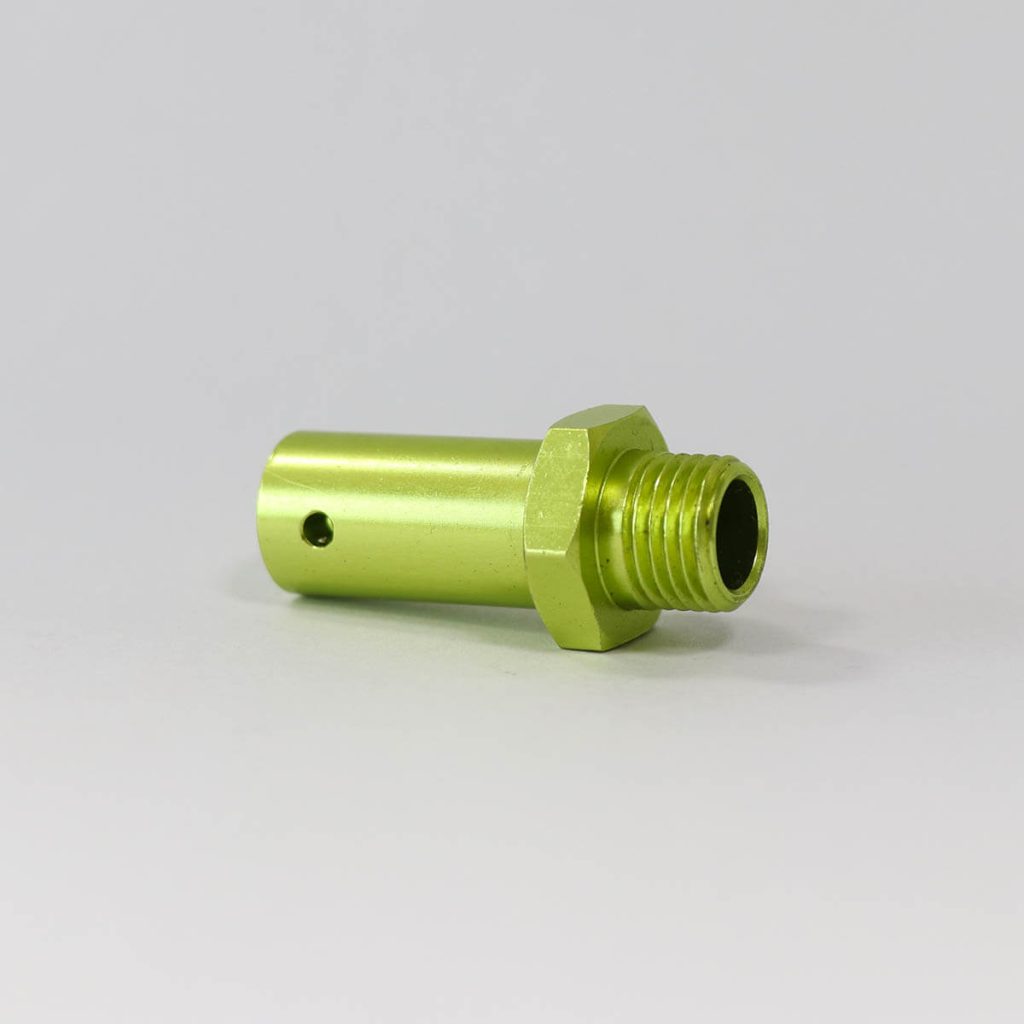
The material should always be selected together with part geometry, required tolerance, production volume, and application requirements.
Aluminum is one of the most widely used materials for CNC milling because it offers excellent machinability, low density, good strength, and relatively fast production.
Grades such as 6061-T6 are commonly used for general-purpose components, while 7075 is preferred when higher strength is required. Aluminum is particularly suitable for:
Aerospace brackets
Robotics housings
Automotive components
Electronic enclosures
For example, a robotics manufacturer may choose 6061 aluminum for a motor housing because the material reduces moving weight while remaining easy to machine. A 5-axis CNC machine can then produce complex pockets and angled surfaces with fewer setups.
Stainless steel is a better option when corrosion resistance, durability, and strength are more important than low weight.
Grades such as 303, 304, 316, and 17-4 PH are used in industrial, medical, aerospace, and food-processing applications. However, stainless steel generally requires slower cutting conditions and more careful tool management than aluminum.
This can increase machining time and lead times, especially for complex parts with tight tolerances.
CNC turning is generally the most efficient process for cylindrical and rotationally symmetrical parts. The workpiece rotates while cutting tools remove material from the outside or inside diameter.
Brass is one of the most machinable CNC materials. It is commonly used for:
Fittings
Valves
Connectors
Bushings
Precision hardware
For example, a brass connector with external threads, internal bores, and multiple diameters can often be produced efficiently on a CNC turning center. Its excellent machinability helps reduce cycle time and tool wear.
Steel and stainless steel are frequently used for shafts, pins, mechanical components, and industrial parts that require higher strength.
A 4140 steel shaft, for example, may be selected for a high-load mechanical assembly. A 303 stainless steel component may be preferred when corrosion resistance and improved machinability are both important.
For round parts, turning can provide excellent control of diameter, roundness, and concentricity. Kintec Machining supports CNC turning for materials including steel, stainless steel, aluminum, brass, and difficult-to-machine alloys.
5-axis machining is especially useful for complex parts with angled surfaces, deep features, and contoured geometries.
Titanium is widely used in aerospace and medical applications because of its high strength-to-weight ratio and excellent corrosion resistance.
However, titanium is more challenging to machine than aluminum or brass. It generates heat at the cutting zone and requires careful control of cutting parameters, tooling, fixturing, and tool engagement.
A practical example is an aerospace structural component with complex curved surfaces. 5-axis machining can reduce the number of setups, improving feature-to-feature accuracy while reducing handling time.
For complex aerospace or robotics parts that do not require titanium-level performance, aluminum is often a more economical alternative. Its excellent machinability can help reduce cycle time and production lead times.
Kintec’s 5-axis machining capabilities are designed for complex contours and multi-sided parts, while tighter tolerances are evaluated according to technical drawings and critical feature requirements.
Swiss machining is designed for small-diameter, long, and slender components that require high precision.
| Material | Swiss Machining Advantage | Typical Application |
|---|---|---|
| Brass | Excellent machinability | Electronic connectors |
| Stainless Steel | Strength and corrosion resistance | Medical components |
| Titanium | High strength-to-weight ratio | Medical and aerospace parts |
| Engineering Plastics | Low weight and insulation | Precision technical components |
For example, a small medical component with a long, slender geometry may experience deflection during conventional turning. Swiss machining supports the material close to the cutting area, helping maintain dimensional accuracy.
Material properties can directly affect the achievable tolerance of a part.
Hardness, stiffness, thermal expansion, and heat generation all influence dimensional stability. Plastics, for example, may expand more significantly with temperature than metals. Titanium may require additional process control because of heat generation and machining difficulty.
As a general manufacturing principle:
Use standard tolerances for non-critical dimensions.
Apply tighter tolerances to mating, sealing, and locating features.
Avoid specifying extremely tight tolerances across the entire drawing unless function requires them.
Kintec Machining states that selected CNC machining features can achieve tolerances as low as approximately ±0.0002 in, with tighter requirements evaluated based on technical drawings and part geometry.
Material choice affects more than raw material pricing. It can influence:
Machining speed
Tool life
Cycle time
Inspection requirements
Surface finishing
Heat treatment
Overall production lead time
For example, a simple aluminum prototype may be completed faster than a complex titanium part requiring 5-axis machining and additional inspection.
For low-volume production, the right material and process combination can also reduce unnecessary tooling and setup costs. Kintec supports low-volume production for prototypes and specialized production runs, with applications across aerospace, medical, robotics, and other industries.

Material choice affects more than raw material pricing. It can influence:Machining speed,Tool life,Cycle time,Inspection requirements,Surface finishing,Heat treatment,Overall production lead time.
For example, a simple aluminum prototype may be completed faster than a complex titanium part requiring 5-axis machining and additional inspection.
For low-volume production, the right material and process combination can also reduce unnecessary tooling and setup costs. Kintec supports low-volume production for prototypes and specialized production runs, with applications across aerospace, medical, robotics, and other industries.
A practical material selection process should consider five questions:
What loads and forces will the part experience?
Does the part need corrosion, heat, or wear resistance?
Which CNC process best matches the part geometry?
What tolerances are functionally required?
What quantity and lead time must be achieved?
The best material is the one that satisfies the application requirements while remaining compatible with the most efficient manufacturing process.
Material selection and process selection should not be treated as separate decisions. The right combination can improve dimensional accuracy, reduce machining costs, shorten lead times, and improve long-term part performance.
Kintec Machining is a China-based CNC machining manufacturer specializing in CNC milling, CNC turning, 5-axis machining, Swiss machining, rapid prototyping, and low-volume production. The company supports materials including aluminum, stainless steel, brass, copper, titanium, steel, and engineering plastics for aerospace, medical, automotive, robotics, electronics, and industrial applications.
Send your drawings for a free review and quick quote. Our engineers are here to help.
ISO certified | Fast delivery | Factory Direct