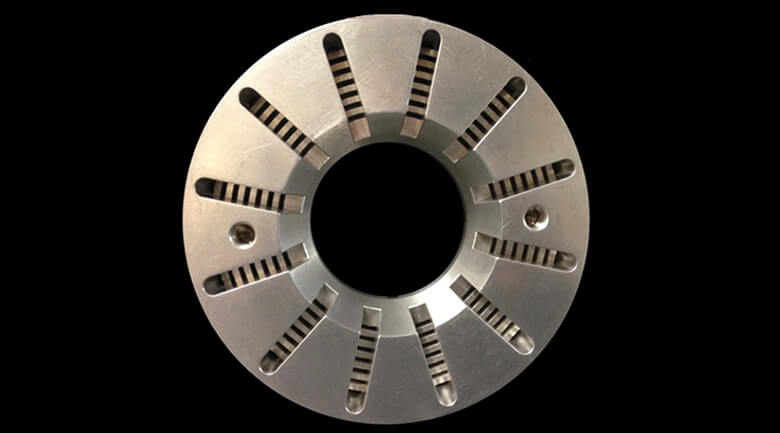
Titanium is the material engineers reach for when strength-to-weight, corrosion resistance, and biocompatibility all matter — and the budget supports it. Titanium CNC machining is also the slowest and most demanding work in the shop: the metal work-hardens, generates heat, attacks tools, and punishes the wrong feeds and speeds. The grade choice, machining setup, and supplier capability decide whether you get aerospace-grade parts or a box of expensive scrap.
What Is Titanium CNC Machining?
Titanium machining is the production of custom parts cut from titanium bar, plate, or billet on computer-controlled mills and lathes. Done right, it delivers parts with excellent fatigue strength, exceptional corrosion resistance, and the traceability aerospace and medical work demands. Done wrong — wrong tools, wrong speeds, contaminated chips — and you waste premium stock on parts that fail inspection.
Best Titanium Grades for CNC Machining
Grade selection is the single biggest decision in any titanium quote. The most common options for CNC milling and turning:
| Grade | Composition | Why It’s Used | Typical Applications |
|---|---|---|---|
| Grade 2 | Commercially pure (CP) | Corrosion resistance, weldable | Marine, chemical, heat exchangers |
| Grade 5 (Ti-6Al-4V) | Ti + 6% Al + 4% V | The aerospace workhorse — strong & light | Aerospace structures, motorsport, marine |
| Grade 23 (Ti-6Al-4V ELI) | Same as Grade 5, lower interstitials | Biocompatible for long-term implants | Orthopedic, dental, spine implants |
| Grade 7 | Ti + 0.15% Pd | Superior corrosion in reducing acids | Chemical processing equipment |
| Grade 9 (Ti-3Al-2.5V) | Mid-grade alloy | Weldable, fatigue resistant | Aerospace tubing, bike frames |
Grade 5 (Ti-6Al-4V) accounts for most aerospace and high-performance titanium work. Switch to Grade 23 only when the part is going inside a human body — the lower interstitial content matters for long-term implants but adds cost. For small slender titanium components like bone screws, Swiss machining dominates at production volume.
Tolerances and Lead Times for Titanium CNC Machining
Titanium machining hits the same precision tolerances as steel or aluminum — general ±0.13 mm, precision ±0.013 mm, and high-precision features down to ±0.005 mm on proper 5-axis equipment. Cycle times run roughly three to five times longer than equivalent aluminum because feeds and speeds must stay conservative. Expect simple titanium prototypes in 1–2 weeks, low-volume production in 4–6 weeks, and orders with full medical or aerospace documentation in 6–10 weeks.
Where Titanium CNC Machining Parts Are Used
- Aerospace: structural brackets, fasteners, hydraulic fittings, engine components (Grade 5)
- Medical: orthopedic implants, bone screws, dental components, surgical instruments (Grade 23)
- Marine: propeller shafts, fittings, valve bodies (Grade 2 or 7)
- Chemical processing: heat exchangers, reactor parts, pumps (Grade 7)
- Motorsport & defense: suspension components, fasteners, armor inserts (Grade 5)
Surface Finishes for Machined Titanium
Titanium responds well to several finishes, and the right one depends on the application. Type II anodizing creates a colored oxide layer through voltage control — common for aerospace identification and medical color-coding. Electropolishing is the standard finish for implantable Grade 23 parts. Passivation per ASTM F86 removes embedded iron from machining contact. Bead blasting and tumbling handle deburring and matte cosmetic finishes. Specify the finish at quote time — adding it later is the most common cause of medical and aerospace delivery slips.
How to Source Quality Titanium CNC Machining
Verify the supplier owns the machines, holds current ISO 9001:2015 (plus AS9100 for aerospace and ISO 13485 for medical), uses dedicated tooling to prevent cross-contamination, and produces mill certs traceable to the titanium heat number. Titanium chips are flammable — a real shop will have a clear protocol for handling them. A broker won’t. See our equipment list and quality certifications for what to expect from a serious manufacturer.
FAQ: Titanium CNC Machining
What’s the best titanium grade for CNC machining?
Grade 5 (Ti-6Al-4V) for aerospace and high-performance structural work, Grade 23 (Ti-6Al-4V ELI) for implantable medical parts, Grade 2 for corrosion-focused marine and chemical components, and Grade 7 for aggressive acid environments.
What tolerances can titanium CNC machining hold?
General around ±0.13 mm, precision features to ±0.013 mm, and high-precision aerospace or implantable features down to ±0.005 mm with 5-axis equipment and CMM inspection.
Why does titanium cost more to machine than aluminum?
The raw stock costs significantly more, the cutting speeds must stay much lower to control heat, tools wear faster, and the documentation requirements for aerospace and medical add overhead. Plan for cycle times three to five times longer than equivalent aluminum work.
Related Reading
For more on related topics, see our beginner guide to what CNC machining is, our blog on quality control in CNC machining, and the full Kintec blog for materials, tolerances, and finishing topics.
Got Titanium Parts That Won't Pass Your Aerospace or Medical Audit?
Kintec sends the paperwork with the parts. Heat numbers, FAI reports, passivation certs, CMM data — all in the box before you have to ask.
- Mill certs traceable to specific heat numbers on every titanium order
- First Article Inspection reports for aerospace and medical work
- ASTM F86 passivation certificates on biocompatible Grade 23 parts
- ISO 9001:2015 certified, with AS9100 and ISO 13485 experience
👉 Send us your drawing and get a free factory-direct titanium quote in 24 hours.