


Call us and get your quote!
10% Off Your First Custom Part
-Start Today!
Send your drawings for a free review and quick quote. Our engineers are here to help.
ISO certified | Fast delivery | Factory Direct

Choosing the right material is one of the most important decisions in CNC machining. Material properties affect part strength, weight, corrosion resistance, machinability, dimensional stability, surface finish, machining tolerances, cost, and lead time.
For engineers, sourcing managers, and product developers, the best CNC machining material is not necessarily the strongest or most expensive option. The right choice depends on the part’s operating environment, mechanical requirements, production volume, required tolerance, and application.
This guide compares the key material properties of common CNC machining materials and explains how to select the right option for real-world manufacturing projects.
When selecting a material for a CNC machined part, consider these core properties:
Strength: Determines how well the part handles mechanical loads.
Hardness: Affects wear resistance and machining difficulty.
Density: Influences component weight.
Corrosion resistance: Important for outdoor, marine, medical, and chemical environments.
Thermal properties: Critical for parts exposed to heat or temperature changes.
Electrical conductivity: Important for electrical and electronic components.
Machinability: Influences cutting speed, tool wear, surface finish, and production cost.
Material selection also affects achievable CNC machining tolerances. A material that is difficult to machine or highly sensitive to heat may require more advanced process control to maintain tight dimensional accuracy.
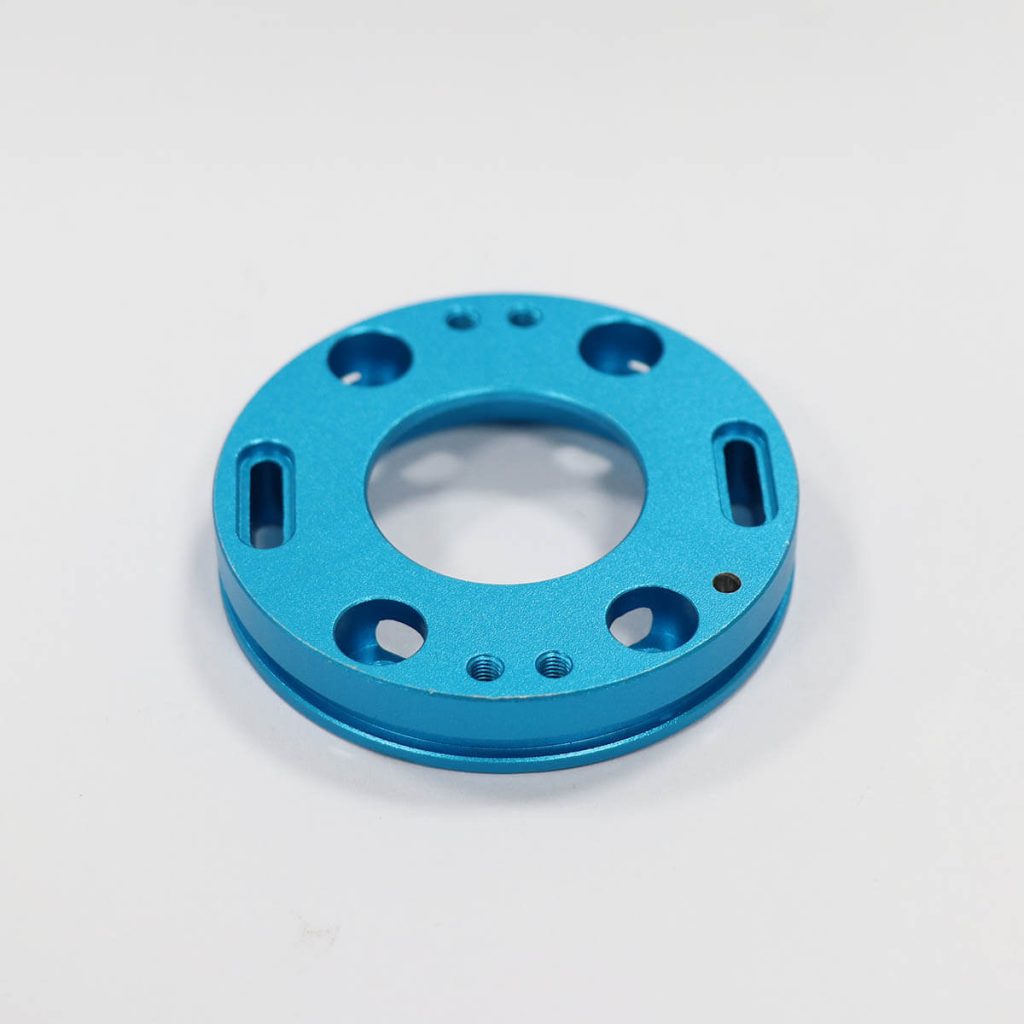
The following table provides a practical comparison of the main materials commonly used for custom CNC machined parts.
| Material | Key Properties | Machinability | Typical Applications |
|---|---|---|---|
| Aluminum | Lightweight, strong, good corrosion resistance | Excellent | Aerospace, electronics, automotive |
| Stainless Steel | High strength, durable, corrosion resistant | Moderate | Medical, industrial, food equipment |
| Brass | Excellent machinability, conductive, corrosion resistant | Excellent | Fittings, connectors, precision components |
| Copper | Excellent electrical and thermal conductivity | Moderate | Electrical contacts, heat transfer components |
| Titanium | High strength-to-weight ratio, corrosion resistant | Challenging | Aerospace, medical, high-performance parts |
| Engineering Plastics | Lightweight, insulating, chemically resistant | Good | Robotics, electronics, medical components |
Aluminum is widely used because it combines low density, good strength, excellent machinability, and relatively short production lead times. Grades such as 6061-T6 and 7075 are frequently selected for structural components, housings, brackets, aerospace parts, and robotics components.
For example, an electronics enclosure may use 6061 aluminum to reduce weight while maintaining sufficient structural strength. A high-load aerospace bracket may require 7075 aluminum for improved strength-to-weight performance.
Stainless steel is often selected when a part must withstand harsh environments, repeated loading, or frequent cleaning. Grades such as 303, 304, 316, and 17-4 PH offer different combinations of machinability, corrosion resistance, and strength.
For example, 316 stainless steel is commonly considered for components exposed to moisture or corrosive environments, while 17-4 PH may be selected for high-strength industrial and aerospace components.
Because stainless steel can generate more heat and tool wear during machining, it may require more careful process planning than aluminum. This can affect both machining cost and lead time.
Brass is an excellent choice for precision fittings, threaded components, valves, connectors, and other parts requiring good machinability. Copper is preferred when electrical or thermal conductivity is a primary requirement.
For example, a precision electrical contact may require copper, while a threaded fitting may be better suited to brass because of its excellent machinability and dimensional consistency.
Titanium offers an excellent strength-to-weight ratio and outstanding corrosion resistance. It is widely used in aerospace, medical, and high-performance applications.
However, titanium is more challenging to machine than aluminum or brass. Cutting conditions, tooling, heat management, and fixturing must be carefully controlled. As a result, titanium parts may have longer machining lead times and higher production costs.
Engineering plastics such as POM, PEEK, PC, PA6, and other technical polymers are useful when low weight, electrical insulation, chemical resistance, or low friction is required.
Plastic parts require different machining strategies because thermal expansion, clamping pressure, and material flexibility can affect dimensional accuracy. For precision applications, the material grade and operating temperature should be reviewed before production.

Material selection directly affects tolerance control. Standard CNC machining tolerances may be suitable for general components, while tighter tolerances are typically reserved for critical fits, bearing seats, sealing surfaces, and precision interfaces.
For example:
A non-critical exterior surface may not require an extremely tight tolerance.
A bearing housing may require tighter dimensional control.
A plastic component may require compensation for thermal expansion.
A thin titanium or aluminum part may require special fixturing to minimize distortion.
Applying tight tolerances only where function requires them can reduce machining time, inspection requirements, and overall manufacturing cost.
Material price is only one part of total CNC machining cost. The material can also influence:
Cutting speed and machining time
Tool consumption
Fixturing requirements
Surface finishing requirements
Inspection complexity
Heat treatment or post-processing
Production lead time
For example, a simple aluminum prototype may be completed faster than a complex titanium component requiring specialized tooling and additional inspection. Choosing a material that meets the engineering requirement without unnecessary performance can significantly improve the manufacturing schedule.
A practical selection process should answer five questions:
What loads and forces will the part experience?
Will the part be exposed to moisture, chemicals, heat, or wear?
What CNC machining tolerances are actually required?
Does the part require electrical conductivity, low weight, or insulation?
What production volume, cost target, and lead time must be achieved?
For complex parts, material selection should be reviewed together with part geometry, machining process, surface finish, and production quantity.
The right material can improve part performance, reduce machining costs, simplify production, and shorten lead times. Kintec Machining helps engineers and sourcing teams select and manufacture precision components from aluminum, stainless steel, brass, copper, titanium, steel, and engineering plastics.
From rapid prototypes and low-volume production to complex 5-axis machining and high-volume CNC manufacturing, our team can evaluate your material requirements, tolerances, geometry, and application before production.
Have a CNC part that needs the right material? Upload your CAD file and contact Kintec Machining for a professional material recommendation and fast quotation.
Send your drawings for a free review and quick quote. Our engineers are here to help.
ISO certified | Fast delivery | Factory Direct