Three Quotes, Three Stories, One Hard Lesson
Priya is a sourcing manager at a mid-size robotics company. Last spring she sent the same enclosure drawing to three suppliers and got back three wildly different CNC machining cost quotes — the cheapest was barely a quarter of the most expensive, and the middle one sat somewhere awkward in between. She picked the middle quote. It looked like the safe call.
Six weeks later her assembly line was idle. The cheap parts had been quietly subcontracted to a shop she’d never heard of, the dimensions wandered, and the supplier’s response when she called was a shrug. Priya ended up paying air freight to get replacement parts machined — by the most expensive supplier — and her real CNC machining cost per piece ended up well above where she started.
The lesson Priya took away is the lesson this guide is built around: the number on the quote is not the same as the cost of the part. Below is the practical 2026 breakdown of how CNC machining cost is actually calculated, where the hidden markups live, what really drives your bill, and the moves that genuinely reduce CNC machining cost without sacrificing quality.
How CNC Machining Cost Is Actually Built Up
CNC Milling Cost: Why 3-Axis, 4-Axis, and 5-Axis Rates Differ
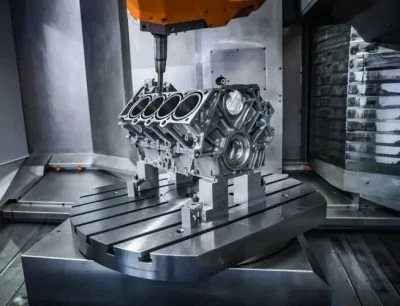
CNC milling is the backbone of most quotes, and the type of machine running your part is the single biggest driver of the hourly rate. 3-axis cells handle plates and simple housings most economically. 4-axis machines step up for multi-face manifolds, with a modest hourly premium. 5-axis centers sit at the top of the rate card because they can hold tighter geometry across complex surfaces in fewer setups.
The trap buyers fall into is assuming the cheapest hourly rate gives the cheapest part. It often doesn’t — because cycle time and setup count vary just as much as the rate. A part that takes one setup on a 5-axis cell can cost less in total than the same part bouncing through three 3-axis setups, even at a higher hourly rate.
CNC Turning Cost: Why Round Parts Are Cheaper to Manufacture
CNC turning tends to carry the lowest hourly rate on the floor, and for round parts it also delivers the fastest cycle. A lathe with a sub-spindle can finish a shaft, drill cross-holes, mill a flat, and part it off in one cycle — no second fixturing. That single-setup advantage is why high-volume round parts ship at a fraction of the cost of equivalent milled work. For small, slender, high-precision turned parts, Swiss machining drops the per-piece cost even further at production volumes.
5-Axis CNC Machining Cost: When the Premium Pays for Itself
5-axis machining commands the highest rate on the floor, but it’s not a luxury — it’s a tool that can collapse three machining setups into one. For complex aerospace and medical parts requiring tolerances measured in microns, the per-piece cost of 5-axis is frequently lower than the alternative, because every setup eliminated is a chance for error eliminated too.
The Hidden Markup That Inflates Your CNC Quote
Brokers and Marketplaces: The Invisible CNC Machining Cost Premium
This is what bit Priya. A growing share of online CNC quoting platforms don’t actually own a single machine. They’re software layers that route your file to a hidden pool of shops, take a markup of roughly a quarter to nearly half on top of the factory price, and call themselves “manufacturers.” Two consequences follow. First, you can’t trace where your part is actually made — or with what steel. Second, when something goes wrong, you’re calling a chat window, not a foreman.
Factory-Direct Sourcing: The Cleanest Way to Cut CNC Machining Cost
Working directly with a real factory removes the broker margin, the broker-to-shop communication gap, and the broker-to-shop quality control gap all at once. You pay the people who own the machines, you can ask for material certs and CMM reports without negotiation, and you have one phone number to call when the schedule slips. For most buyers, going factory-direct is the single largest line-item reduction available on a CNC machining quote.
The Five Real Drivers of CNC Machining Cost
1. Material Choice: The Biggest CNC Machining Cost Lever
Raw stock typically makes up 20–40% of the final bill, and the price ratios between materials are far wider than buyers expect. Aluminum 6061 is the cost-efficient default. Aluminum 7075 carries a moderate premium for higher strength. Brass and stainless steel sit higher still, with stainless cutting more slowly and wearing tools faster. Titanium grades sit at the top of the pyramid by a wide margin — appropriate for aerospace and medical, often overkill anywhere else.
One customer story makes the point. An engineer once specified 7075 across an entire bracket family because “stronger is safer.” A two-minute material review showed that 6061 met every functional load case. Switching dropped the bill of materials by close to half, with zero performance change. Material substitution is the most under-used cost lever in CNC.
2. Setup & Programming: The Fixed CNC Cost Buyers Forget
CAM programming and first-piece setup are largely fixed costs, and they don’t shrink whether you order one part or one hundred. That’s why a single prototype almost always costs disproportionately more per piece than a small batch. The fewer unique setups your part needs, the lower the per-piece overhead.
3. Tolerance: How Tight Specs Multiply CNC Machining Cost
An engineer once sent us a bracket with ±0.0002″ called out on every dimension — including the cosmetic edges. He wasn’t careless, just cautious. The result tripled his inspection time and pushed the price past his budget. A short DFM call relaxed the non-critical features to general tolerance and dropped the quote substantially. Same functional part, same fit, much lower bill.
The rule: tight tolerances belong on features that mate, seal, or locate. Everything else should be general (±0.005″/±0.13 mm).
4. Part Geometry: The Quiet CNC Cost Multiplier
A part that looks simple on paper can be expensive to cut. One customer designed a housing with deep narrow pockets — a depth-to-width ratio over 5:1 — that required custom long-reach tooling and painfully slow feeds. The first quote came back several times what he expected. Opening the pockets by roughly a third and matching the inside corners to a standard end-mill radius brought the cost back to earth. Design for the cutter, not against it.
5. Order Quantity: How Volume Reduces CNC Machining Cost
Setup and programming spread across the batch. Going from one part to a hundred typically drops the per-piece cost by half or more — sometimes far more — because the fixed fees finally amortize. If you know production is coming, tell the shop at quote time. A supplier that knows your year-one volume can price the prototype run more aggressively against the upcoming production volume.
Five Practical Ways to Reduce CNC Machining Cost
Run a DFM Review Before You Pay for an Avoidable Mistake
A design-for-manufacturing review catches the expensive features before the first chip flies — unreachable corners, over-tight tolerances, mismatched radii. A good supplier offers DFM for free, because the parts they make are better and the rework they avoid is theirs too. Skipping DFM is how engineers pay for an avoidable redesign three weeks too late.
Design for Standard Tooling to Cut Your CNC Cost
Internal corners should match standard end-mill radii (3 mm, 6 mm, 10 mm). Drill diameters should match standard drills. Pocket depth should stay within three to four times the tool diameter. Following these three rules alone can meaningfully reduce a typical milled-part cost, because the machine runs at full RPM instead of nursing custom tooling through a slow cut.
Loosen Tolerances Where They Don’t Affect Function
Apply tight tolerances only where they truly matter. Use ISO 2768-m general tolerance everywhere else. The savings on inspection alone are often substantial on a complex print, and the quality of the finished part is unchanged.
Batch Smart to Lower Your Per-Part CNC Cost
If a few dozen parts will get used eventually, don’t order five. Combine prototype and bridge production into one batch when the design is locked. A few extra pieces today are cheaper than a second setup tomorrow.
Skip the Middleman to Drop Your CNC Machining Cost
Priya’s enclosure story has a simple ending. After the broker disaster, she moved her CNC work to a direct factory, kept the same drawings, and her landed cost dropped meaningfully — with material certs and CMM reports she’d never received before. Going direct isn’t a slogan; it’s an arithmetic fact about how supply chains add margin.
A Final Word on Smarter CNC Machining Spending
The buyers who consistently pay the right price for CNC machining are not the ones hunting the lowest quote. They’re the ones who understand how the quote is built, who design around the cutter instead of against it, who tighten tolerances only where it matters, and who avoid the brokers quietly skimming margin from the middle. Apply those four habits and you’ll spend less on every program you run — and Priya’s six-week disaster won’t happen to you.
FAQ: CNC Machining Cost
What factors most affect CNC machining cost?
The five biggest drivers are material choice, setup & programming, tolerance demands, part geometry, and order quantity. Of these, material and quantity tend to swing the bill the most in either direction.
How can I reduce CNC machining cost on a complex part?
Loosen non-critical tolerances to general spec, design internal corners to match standard end-mill radii, switch to a more machinable alloy where the design allows, and batch your order rather than ordering one at a time.
What is the biggest hidden cost in a CNC quote?
Setup and programming time. On low-volume orders these fixed fees can account for a large share of the total bill. Designing parts that need fewer unique setups is the fastest way to bring per-piece cost down.
Does DFM really save money?
Yes — DFM catches the expensive features (unreachable corners, over-tight tolerances, custom tooling needs) before the first chip flies. It typically prevents a meaningful share of avoidable rework cost on a complex part, and most reputable suppliers offer it for free.
Are factory-direct CNC machining services really cheaper than online platforms?
Usually, yes. Online marketplaces typically add a markup over the underlying factory quote and don’t own the machines themselves. Going direct removes that margin and gives you traceability the marketplace can’t.
Sick of Parts That Pass on Paper But Fail at Assembly?
Kintec Machining is built to make that moment go away. We don’t just send you parts — we send the proof they’re right.
- ✅ Free DFM review before we cut, so the print problems surface early — not at your assembly station
- ✅ CMM inspection reports on every critical feature, with dimensional data you can hand to your auditor
- ✅ Material certs traceable to the mill batch — no “trust us” substitutions
- ✅ Milling, turning, 5-axis & Swiss in one shop — no datum loss between vendors
- ✅ A real engineer on email, in clear English, within hours — not a chat window
Stop guessing whether your next batch will fit. 👉 Send us your drawing and get a free quote in 24 hours.