The Demo That Almost Didn’t Happen
Marcus had three weeks to validate a new robotic gripper before his board demo. The design needed twelve titanium joint mounts — every one slightly different — to prove the concept worked. He called three suppliers. The first two told him their minimum order was 500. The third quoted ten weeks and $3,500 in tooling. His demo was in twenty-one days.
That’s when Marcus discovered custom CNC machining. He sent a STEP file to a precision shop on a Monday. Twelve titanium mounts shipped the following Wednesday — no tooling, no MOQ, full inspection report attached. The board demo went ahead. The product is in production today.
Marcus’s story isn’t rare. It’s the quiet reason custom CNC machining exists: to make the parts that don’t fit the catalog, in the quantities that don’t fit a mold, on the timeline that real projects actually live by. This guide walks through what that means in practice — the processes, materials, tolerances, lead times, and the pain points B2B buyers learn to watch for.
What Is Custom CNC Machining?
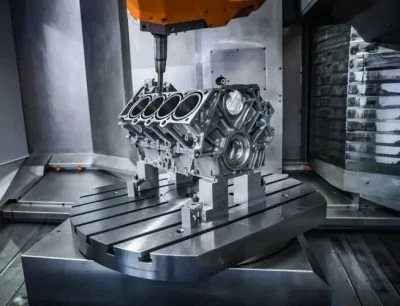
Custom CNC machining is the production of parts to your specification — your design, your material, your tolerance, your quantity — on computer-controlled machines. “CNC” stands for computer numerical control: the machine follows a program built from your CAD model and cuts the part out of solid stock. No molds, no dies, no minimum order in the thousands.
That last part matters more than buyers realize. Because there’s no hard tooling, CNC machining is economical from a single prototype up through mid-volume production. It’s the only path for one-off aerospace test parts, the practical path for medical device prototypes, and the fastest path for a redesign that has to ship next week.
When You Actually Need Custom CNC Machining
Off-the-shelf parts cover the easy 80%. Custom machining covers the projects that quietly decide whether your product launches:
- Prototypes that need production-grade material from the first piece
- Low-volume parts (1 to 1,000) where injection molding or casting makes no sense
- Modified versions of an existing part — a different bore, an extra hole, a tighter tolerance
- One-of-a-kind components for test rigs, fixtures, or replacement parts
- Bridge production while waiting on tooling for a high-volume launch
- Anything aerospace, medical, or regulated that needs full traceability
The Processes Behind Custom CNC Machining
A real custom CNC machining shop runs more than one type of machine. Geometry decides which one cuts your part:
- CNC milling: rotating cutter, fixed workpiece — for brackets, housings, manifolds, and prismatic parts.
- CNC turning: spinning workpiece, fixed tool — for shafts, pins, bushings, and threaded round parts.
- 5-axis machining: the tool moves on five axes at once — undercuts, freeform surfaces, complex geometry in fewer setups.
- Swiss machining: guide-bushing turning for small, slender, high-precision parts like connector pins and bone screws.
One shop running all four lets your part stay in-house from the first cut to final inspection. Every handoff between vendors is a place a tolerance slips or a deadline drifts.
The $40,000 Inventory That Wasn’t Wanted
Here’s a small story buyers should hear before they accept an MOQ. A startup we’ll call Elena’s team needed 80 precision bushings for a pilot run. The supplier they found insisted on a 1,000-piece minimum to “make it worth running the setup.” Elena, under deadline pressure, agreed.
The 1,000 bushings arrived. The pilot consumed 80. The other 920 sat in a warehouse for two years, then went to scrap when the design was revised. The cheapest per-piece quote turned into the most expensive bushings the company ever bought. The lesson custom CNC machining teaches is simple: pay for the quantity you actually need, not the quantity that makes a shop’s morning easier.
Materials You Can Order Custom Machined
One advantage of CNC machining over casting or molding is material freedom. The same shop runs aluminum today, titanium tomorrow, and PEEK on Friday — no new tooling.
| Material | Why Choose It | Typical Uses |
|---|---|---|
| Aluminum (6061, 7075) | Light, fast to machine, affordable | Housings, brackets, prototypes |
| Stainless steel (304, 316, 17-4PH) | Corrosion resistant, strong | Medical, marine, food equipment |
| Alloy steel (4140, 4340) | High strength, heat-treatable | Shafts, gears, high-load parts |
| Titanium (Ti-6Al-4V) | Strong, light, biocompatible | Aerospace, implants |
| Brass / copper | Conductive, easy to machine | Contacts, fittings |
| Engineering plastics (PEEK, PTFE, POM) | Light, chemically resistant | Seals, insulators, medical |
A good supplier will suggest cost-saving substitutions when the spec allows — 6061 instead of 7075 when the extra strength isn’t needed, 303 instead of 304 when machinability matters more than weldability.
Tolerances You Can Actually Order
Custom doesn’t mean unrealistic. Engineering tolerance drives both quality and cost — tighten only what truly matters.
| Tolerance Level | Typical Range | When to Use |
|---|---|---|
| General | ±0.005″ (±0.13 mm) | Most non-critical features |
| Tight | ±0.001″ (±0.025 mm) | Mating surfaces and fits |
| Precision | ±0.0005″ (±0.013 mm) | Bearings, seals, alignment |
| High precision | ±0.0002″ (±0.005 mm) | Aerospace, medical, optics |
One engineer once sent us a bracket with ±0.0002″ called out on every single dimension — even cosmetic edges. He wasn’t careless; he just wanted it safe. The result tripled his inspection time and pushed the price past his budget. A two-minute DFM call relaxed the non-critical features to general tolerance and dropped the quote by 40%. Same functional part. That’s what good DFM looks like.
Lead Times
| Order Type | Typical Lead Time |
|---|---|
| Simple custom prototype (1–5 pcs) | 3–7 days |
| Complex 5-axis prototype | 1–2 weeks |
| Low-volume production (50–500 pcs) | 2–4 weeks |
| With anodizing / plating / heat treat | Add 5–10 days |
The fastest way to compress lead time isn’t paying a rush fee. It’s sending a clean STEP file with a clear print and your real quantity up front, so the shop plans tooling once instead of twice.
Where Custom CNC Parts End Up
| Industry | Typical Custom CNC Parts |
|---|---|
| Aerospace | Brackets, impellers, test fixtures |
| Medical | Implants, surgical instruments, prototypes |
| Automotive / EV | Bracketry, prototypes, performance parts |
| Robotics | Joint mounts, end-effectors, custom housings |
| Electronics | Connector pins, heat sinks, enclosures |
| R&D / Industrial | One-off tooling, fixtures, replacement parts |
The Impeller Three Shops Turned Down
One more short story. An aerospace test engineer needed a single titanium impeller — one piece, 5-axis geometry, ±0.0005″ on the blade profile. Three local shops passed: two didn’t have 5-axis capability, the third said the program would take longer than the cut. A specialist took the job, programmed it in two days, and shipped the impeller a week later with a full CMM report. Sometimes “custom” really means “find a shop that’s already done parts like this.” Capability isn’t optional.
How to Choose a Custom CNC Machining Partner
Marcus’s twelve titanium mounts worked because he picked the right partner the second time. When you evaluate custom CNC machining shops, look past the unit price:
- No MOQ traps: a real custom shop quotes the quantity you ask for — not the quantity that suits them.
- Multiple processes under one roof: milling, turning, 5-axis, and Swiss in-house means no vendor handoffs.
- Engineering support: DFM feedback before you cut, not excuses after.
- Real inspection: CMM reports and material certs — proof, not promises.
- Quality system: ISO 9001:2015 (plus AS9100 or ISO 13485 where relevant).
- Honest communication: fast, clear English, real lead times, and someone who picks up when something goes wrong.
Why the Cheapest Quote Often Hurts Most
Custom work magnifies supplier choice. A few hidden costs that don’t show up in a unit price:
- An MOQ you didn’t need — and inventory you’ll scrap later.
- A shop that machines exactly what’s on the print, mistakes included, because it skipped DFM.
- “Custom” parts that are actually a standard part with a feature added — and the wrong material underneath.
- A supplier who quietly subcontracts the job and loses the datum between operations.
None of this shows up on the quote. It shows up later — in your schedule, your scrap pile, and your customer’s patience.
FAQ
What is custom CNC machining?
Manufacturing parts to your specification — your design, material, tolerance, and quantity — on computer-controlled machines, with no hard tooling required.
What’s the minimum order for custom CNC machining?
A capable shop will run a single piece. The economics get more favorable as quantity rises, but there’s no technical minimum.
What files do I need to send?
A 3D CAD model (STEP, IGES, or Parasolid) and a 2D drawing showing critical dimensions, tolerances, material, and finish.
How fast can custom parts ship?
Simple prototypes in 3–7 days, complex 5-axis parts in 1–2 weeks, low-volume production in 2–4 weeks — plus finishing time if applicable.
What tolerances can custom CNC achieve?
General around ±0.005″, precision features to ±0.0005″, and high-precision aerospace or medical features down to ±0.0002″.
Been Burned by a "Custom" Supplier Before?
You’ve heard the lines. “Yes, we can do that.” “It’s within tolerance.” “The parts shipped — there must be an issue on your end.” Then the box opens and the work begins all over again.
Kintec Machining is built to prove your parts are right before they leave the shop — and to back it with the documentation your auditor expects.
- Free DFM review so problems are caught before the first chip flies
- CMM inspection reports on every critical feature — proof, not promises
- Material certs traceable back to the mill
- ISO 9001:2015 certified, with AS9100 / ISO 13485 experience
Stop guessing whether your next batch will pass. 👉 Send us your drawing and get a free quote today.